
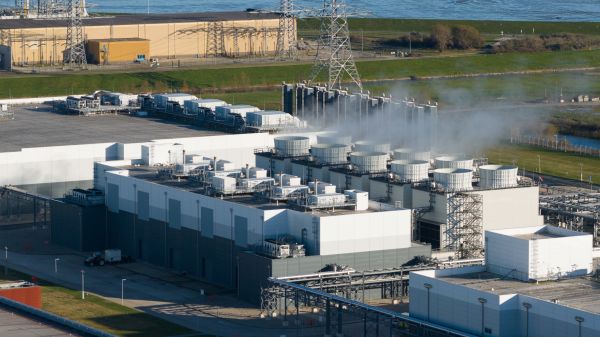
The rapid growth of hyperscale data centres driven by the spread of artificial intelligence (AI) has prompted an analysis warning that the heat island effect from the facilities’ “direct heat” could raise surrounding temperatures more than expected.
On April 6, IT outlet TechRadar cited researchers at the University of Cambridge and expert comments in reporting concerns that hyperscale data centres could have an immediate impact on local environments beyond their huge power use and emissions problems.
A University of Cambridge research team led by Andrea Marinoni (안드레아 마리노니) analysed temperature data from more than 6,000 hyperscale data centres over the past 20 years. The team separately assessed temperature changes after operations began, reflecting global warming trends, seasonal shifts and local factors.
The analysis found ground-surface temperatures near data centres rose by an average of about 2 degrees, and by as much as about 9 degrees in some areas. The temperature increase did not remain confined to the facilities. The team judged that the added heat can spread outward and, in some cases, affect areas up to 6.2 miles (about 9 km) from a data centre. When matched with population data, the analysis found that more than 340 million people in North America, Europe and Asia live in areas affected by higher temperatures.
The team also presented regional cases. In Mexico’s Bajio and Spain’s Aragon, temperature increases were observed that differed from surrounding areas. The researchers interpreted the differences as likely linked to heat from the data centres themselves rather than to other environmental factors.
Marinoni said there are still major gaps in understanding the impact of data centres and stressed that such heat effects have been relatively overlooked. He also warned that planned expansion in the scale of data centres could have dramatic effects on society.
Experts said further research is needed to draw firm conclusions because the results include instances of especially sharp local temperature spikes. Even so, they said it has become clear that as climate discussions focus on emissions and power use, energy-intensive AI operations can add burdens to surrounding areas in the physical form of heat.
The researchers said data centre design and operating strategies need to be reviewed to reduce additional heat stress while continuing the spread of AI.
 Yu Seung-a
ysah@d-today.co.kr
Yu Seung-a
ysah@d-today.co.kr