
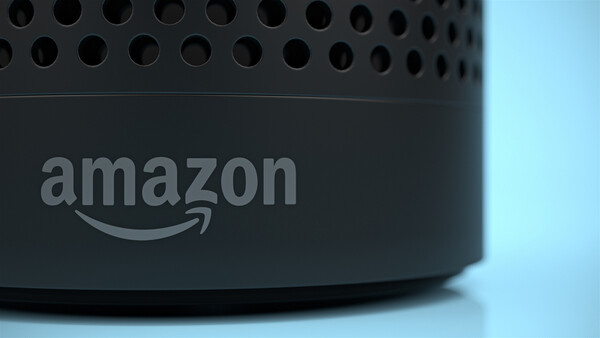
Amazon went through years of persistent experiments and trial and error to create a new user experience called voice-based computing. On April 5 local time, IT outlet The Verge highlighted the internal process leading to Amazon’s Echo smart speaker and Alexa voice assistant through its podcast, “Version History.”
The starting point was a long-held vision of founder Jeff Bezos. From Amazon’s early days, Bezos believed human-computer interaction would move away from keyboards and screens toward a more intuitive voice interface. He has repeatedly stressed that voice could be the “most natural and easiest way” to communicate with technology, but turning it into a product was far more difficult than expected.
The challenges the development team faced went beyond simple speech recognition. It had to build a system that accurately understood what users said, grasped context and provided appropriate responses, and that was seen as a near endless problem given the technology of the time. Collecting and processing voice data, natural language understanding, and improving response speed and accuracy at the same time were each separate hard problems. Integrating them into a seamless user experience was an even bigger challenge. Amazon gradually raised the level of completion through countless failures and repeated experiments, and the result was Echo and Alexa.
Competition also pressured the pace of development. At the time, Apple was leading the voice assistant field with Siri, and Amazon, as a latecomer, had to quickly narrow the gap in both user experience and performance. In particular, to make the new behavior of “talking to a speaker” feel natural, the team closely observed real usage situations and designed various experiments. The report said the team repeatedly carried out what it called “crafty and clever tests” to learn when users used voice commands and what phrases they used. It was a process of learning human behavior patterns around a new interface, beyond building functions.
The launch strategy was also unusual. Bezos chose to release Echo quietly without major marketing or advance promotion. Rather than maximizing anticipation like a typical new product, the idea was to prompt word of mouth naturally through the product experience itself. The Verge said the surprise launch instead drew early users’ attention and led to positive reactions.
Assessments after the success are not one-dimensional. Echo and Alexa helped popularize smart homes and voice interfaces and spread a new computing experience, but their standing later became somewhat complicated amid the rapidly unfolding shift toward generative artificial intelligence. The hosts presented opposing views on whether Alexa helped open the AI revolution or was a case of missing a decisive turning point.
Ultimately, the history of Echo and Alexa shows that technological innovation does not end with a product launch. The assessment is that an interplay of early vision and execution, market timing and later shifts in technology paradigms has revealed both the current position and the limits of voice computing, once seen as the interface of the future.
 Jinju Hong
hongjj@d-today.co.kr
Jinju Hong
hongjj@d-today.co.kr