
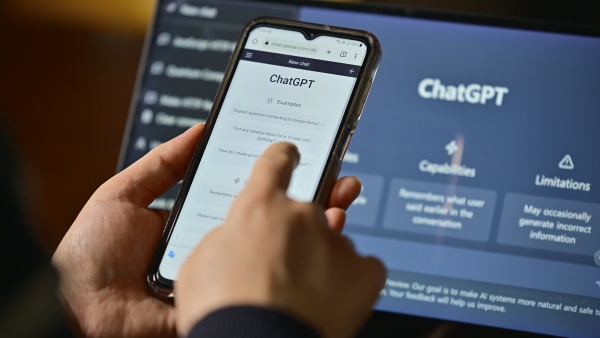
Planning with ChatGPT is becoming increasingly common, but its limitations are also clear. ChatGPT offers useful advice, but it often fails to fully reflect variables that can arise in real life or the possibility of unexpected failure. That is why a plan that looks perfect in theory can easily collapse in practice.
One method drawing attention as a way to address those limits is the so-called “invert prompt.” In connection with that, on March 23, IT outlet TechRadar explained how to make more complete use of ChatGPT with an invert prompt.
The approach is simple. Instead of asking ChatGPT for a solution first as usual, you add one more line to the prompt. For example, you can ask: “Explain first how this plan could fail, and based on that, offer advice.” It is a shift in thinking that checks the worst-case scenario first.
Applying this prompt changes the structure of ChatGPT’s response. When planning a weekend schedule with family, for instance, a standard prompt might produce an ideal itinerary focused on efficient routes and activities. With an invert prompt, it first points out realistic problems such as an overly packed schedule, insufficient travel time and failure to reflect participants’ preferences. It then follows with practical advice such as building a flexible schedule, ensuring time for rest and choosing activities centered on the participants.
The effect is also clear for workplace productivity. If a typical request stops at proposing a perfect routine, an invert prompt first identifies friction points in real work such as excessive multitasking, errors in estimating time and scattered focus. The result is more workable advice such as “focus on one task at a time,” “reduce distractions,” and “build in more time than you expect.” That is why some assessments say it applies to reality better than existing productivity guides.
The core of the approach is that it focuses on preventing failure rather than creating a perfect plan. People are instinctively more accustomed to predicting and avoiding problems. The invert prompt applies that way of thinking to AI to draw out more realistic and specific results.
It is also useful for simple everyday tasks. For example, if you ask first about failure factors when preparing dinner, it can surface problems such as choosing a complicated recipe, insufficient prep and overload from doing tasks at the same time. It then produces practical advice such as picking a simple method, improving preparation and simplifying the order of tasks.
An invert prompt is not just a change in how you ask questions. It is a tool that changes the problem-solving approach itself. Instead of imagining the best outcome, it removes potential problems first. That small difference is drawing attention because it improves the completeness of a plan and significantly boosts its feasibility.
 Jinju Hong
hongjj@d-today.co.kr
Jinju Hong
hongjj@d-today.co.kr