
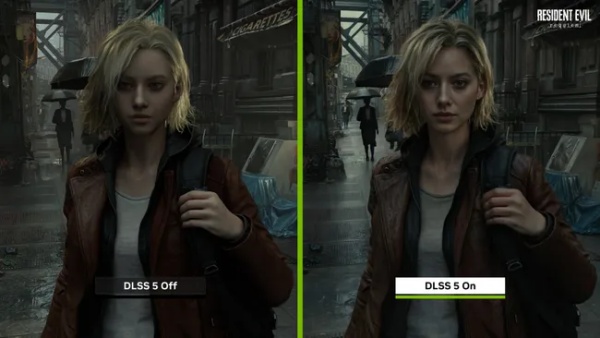
Nvidia's next-generation graphics technology DLSS 5 has become the center of controversy after triggering negative reactions, contrary to expectations, IT outlet TechRadar reported on March 17.
DLSS has driven innovation in game graphics through upscaling and frame generation, and has earned a relatively positive reception among gamers after gradual improvements. Early on, it drew criticism for side effects such as the “fake frames” debate and visual distortion, but those complaints had been easing as the technology matured. Recently unveiled DLSS 5 has reignited debate, with some saying its perceived quality is worse than the previous generation.
DLSS 5 is a technology that Nvidia described as giving pixels realistic lighting and materials through a real-time neural rendering model. It aims to increase realism using AI. Actual user experiences are producing different results from expectations.
The biggest controversy is facial rendering. Some examples show faces being overly retouched or distorted, changing them into appearances completely different from the original intent. Criticism spread even after Nvidia’s own example images for Resident Evil Requiem became a point of dispute. Documentary producer Danny O'Dwyer (대니 오드와이어) criticized the image, saying it “turns every character into an excessively glamorized monster.”
Problems also appeared in sports games. In EA Sports FC, users said the faces of football players were distorted into forms completely different from the real people, sharply reducing realism. In particular, images were shared showing Virgil van Dijk (버질 반 다이크) changed to the point of being almost unrecognizable after DLSS 5 was applied, spreading user complaints.
Concerns were also raised about damage to story immersion. In Hogwarts Legacy, teenage characters were portrayed as looking much older after DLSS 5 was applied, creating situations that clash with the game’s settings. Critic Alex Donaldson (알렉스 도널드슨) said it “makes characters look more than 10 years older.”
Controversy continued over environmental rendering. Some users reported that with DLSS 5 applied, lighting depth, contrast and color disappear and the screen becomes overly bright. In the case of Elder Scrolls IV: Oblivion Remastered, an excessively bright and artificial image was generated compared with the original, drawing assessments that it was similar to applying an excessive HDR effect.
As such examples spread, the perception is growing that DLSS 5 does not guarantee positive results across all game environments. Some gamers are concerned the technology could undermine the art style and story presentation intended by developers. The industry is watching whether updates can improve these problems.
 Jinju Hong
hongjj@d-today.co.kr
Jinju Hong
hongjj@d-today.co.kr