
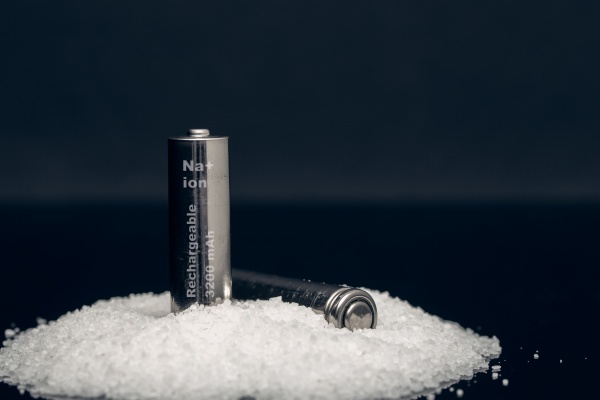
Sodium-ion batteries, known as "salt batteries", are drawing attention as a next-generation energy storage technology. Because of limits on energy density, they are difficult to apply immediately to small electronics such as smartphones. In large-scale energy storage, they could show strengths in cost and safety, according to an assessment.
PhoneArena, an IT-focused outlet, reported on Feb. 10 that sodium-ion batteries are based on the same operating principle as lithium-ion batteries but differ in that they use sodium ions instead of lithium. Their structure repeatedly charges and discharges as ions move through an electrolyte between the cathode and anode. Chemical characteristics are similar, but sodium ions are larger and heavier than lithium ions. As a result, less energy can be stored at the same volume and weight, creating a structural limit of lower energy density.
Currently developed sodium-ion batteries are produced in the 18650 (AA) format, with an energy density of about 90Wh per kg. It is a positive that they have secured durability that maintains more than 80 percent of capacity even after 2,000 charge cycles. This is similar to early lithium-ion batteries, but the gap is large compared with the 150 to 300Wh per kg energy density offered by the latest smartphone batteries. For this reason, analysis suggests they are unlikely to be installed in the next flagship smartphones, such as the Galaxy S26.
Even so, sodium-ion batteries are competitive in other areas. Sodium is far more abundant than lithium, and extraction and processing costs are lower. Unlike lithium, whose reserves are concentrated in specific regions, sodium has less geographic concentration, so supply chain risks are relatively lower. As securing raw materials has recently emerged as a key variable in the global battery industry, these characteristics are seen as a strategic strength.
Safety is also a point of attention. Sodium-based batteries are known to have a relatively lower fire risk and have characteristics suitable for large battery systems. As a result, they are seen as likely to be used in large-scale applications such as energy storage systems (ESS), renewable energy-linked storage devices and household energy solutions. That means they can secure sufficient competitiveness in markets where cost efficiency and stability matter more than energy density.
Some expect charging speeds could improve if sodium ions, which are larger, move more actively. But some also point out that at the current level of technology it is not easy to achieve faster charging than lithium-ion batteries.
Experts cite improving energy density as a key task for commercialising sodium-ion batteries. Physical characteristics limit the ability to store more sodium ions in the same space, but it cannot be ruled out that advances in electrode materials and electrolyte technology could narrow the performance gap. Still, rather than replacing the smartphone market in the short term, they are likely to develop by sharing roles with other next-generation technologies such as all-solid-state batteries.
In the end, the prevailing view is that "salt batteries" are less an immediate game-changer for smartphones than a potential candidate to reshape the energy storage market. Attention is on how sodium-ion batteries will evolve amid a global push to reduce dependence on lithium.
 Jinju Hong
hongjj@d-today.co.kr
Jinju Hong
hongjj@d-today.co.kr