
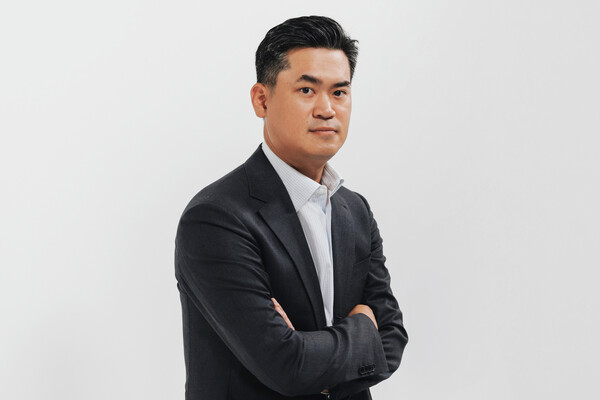
NHN will submit an agenda item at its annual general meeting on March 26 to reappoint CEO Jeong Woo-jin (정우진) as an inside director. Jeong has led NHN for 12 years since taking office in 2014. After last year's split, he posted the highest annual operating results on a full-year basis, laying the groundwork for renewed trust. It is uncommon in South Korea's games and IT industry for a professional manager to lead a single company for more than 12 years. The industry expects the motion to pass smoothly unless there is an unusual variable.
Starting from crisis, restructuring bears fruit after 10 years
When Jeong took office in 2014, 88.3 percent of NHN revenue came from games, with web-board games at the centre. That year, the government introduced monthly payment limits, betting limits and loss limits across web-board games. Paying users fell 40 to 50 percent and related revenue plunged more than 60 percent. The limits of reliance on a single business emerged in his first year in office.
Jeong used the crisis to begin restructuring around three pillars: games, payments and technology, including cloud and AI. The company cut non-core businesses and reduced the number of affiliates to 65 as of the third quarter of last year. It fully shifted from expansion to a strategy of selection and concentration.
The effects of the restructuring were reflected directly in last year's results. On a consolidated basis, revenue rose 2.5 percent from a year earlier to 2.5163 trillion won. Operating profit returned to positive territory at 132.4 billion won, marking the highest annual results since the split.
In 2024, the fallout from the TMON and WeMakePrice incident led to one-off costs including write-offs of doubtful accounts receivable at subsidiaries, resulting in an operating loss of 32.6 billion won. The comparison shows how solid the profit base has become after shaking off external shocks. The share of non-game revenue rose from 11.7 percent in 2014 to more than 80 percent last year. NHN has effectively transformed from a game company into a composite tech company centred on payments and infrastructure.
NHN Payco swung to a quarterly profit for the first time in the third quarter last year, and NHN Cloud posted its first-ever quarterly operating profit in the fourth quarter. As key subsidiaries that had carried heavy early investment burdens entered profitability at the same time, an assessment is emerging that the restructuring is in its final stage.
As payments and cloud drive NHN's top-line growth, the factor that will ultimately affect a re-rating of enterprise value is game performance. While payments and technology each grew more than 10 percent last year, the growth rate of game revenue was limited to 4 percent. It also fell far short of Jeong's stated goal of 30 percent growth in game revenue. With non-game revenue now accounting for more than 80 percent, game performance has paradoxically become the structure that determines earnings volatility and valuation. That is why the core of Jeong's fourth term converges again on games.
Eased web-board rules, six new titles prepare for a comeback in games
Jeong's goal for a fourth term is to complete a structure in which the three pillars of games, technology and payments all grow at the same time. Conditions have become favourable for the games segment in particular, as changes in the external environment align with a new-title lineup.
Starting this year, the monthly payment limit for web-board games was raised to 1 million won from 700,000 won. Within a week of the regulatory change, related revenue posted double-digit growth from the same period of the previous month. NHN is the top operator in the web-board field with titles such as Hangame Poker, and the benefits of the easing are reflected most directly there.
NHN will release a total of six new titles this year. Collection-style RPG Abyssdia ranked No. 1 on Google Play's popularity chart after its global launch on Feb. 25, succeeding in an early box-office run. Oshi no Ko Puzzle Star ranked No. 1 on a local app store popularity chart immediately after its Japan launch on the same day. Dissidia Duelium Final Fantasy, co-developed with Square Enix, began global pre-registration ahead of its formal launch in March.
NHN Chief Financial Officer Ahn Hyun-sik (안현식) said on an earnings conference call, "We will strive so that the new Final Fantasy title can contribute at least more than 10 percent to operating profit."
The new-title strategy of focusing on well-known intellectual property with a proven fan base in Japan is seen as an attempt to raise early hit rates while reducing large-scale development risk.
In the technology segment, a government GPU procurement build-out project, involving 7,656 Nvidia B200 units, will begin full operation this month. NHN was also selected as the operator of Krafton's hyperscale GPU cluster project, making a broadening customer base from the public to the private sector visible. In payments, NHN KCP's overseas merchant transaction volume rose 28 percent from a year earlier. It is also preparing a stablecoin-based payment business as a next-generation revenue source, while discussing cooperation structures with key partners.
In a New Year message, Jeong said, "2026 will be the first year of new growth in which the enterprise value of the entire NHN group takes a step higher, centred on the core businesses of games, technology and payments." Whether he can turn the three pillars into a phase of simultaneous growth, based on the fruits of a decade of restructuring, is expected to be the yardstick for evaluating his fourth term.
 Ho-jung Lee
lhj@d-today.co.kr
Ho-jung Lee
lhj@d-today.co.kr