
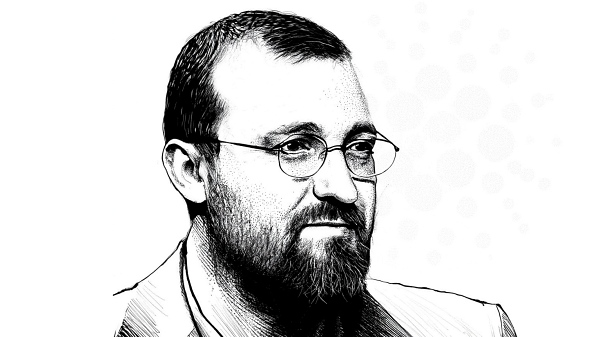
Cardano founder Charles Hoskinson (찰스 호스킨슨) argued that Anthropic should release its AI model Claude as open source. U.Today, a blockchain outlet, reported on Nov. 29 that he cited privacy protection and openness as reasons.
Claude is Anthropic’s latest model. As of November 2026, it is regarded as one of the world’s top-tier models, and the Opus line ranks among the top in software development and agentic coding benchmarks. Anthropic has not released model weights so far.
Hoskinson did not lay out detailed grounds at length. He raised the issue that closed frontier models should be made more transparent and easier to access. He also cited the risk that development could become more complex because Anthropic does not disclose the model’s internal thought process.
If a model shifts to open source, developers can run it directly on local hardware. In that case, they can more directly control its reasoning process, resource usage and factors affecting performance, which is seen as safer and more convenient.
Disclosed weights can also serve as a basis for developing and improving other models. The article said that, like open-source smart contracts in the blockchain industry, progress could spread across the sector if complex logic is studied and applied to other cases. It also offered the view that releasing open-source Opus or Sonnet lines could take open-source AI development a step further.
There are also risks. Open-source models do not have a clear controlling entity, allowing criminals to use them for reverse engineering, brute-force attacks or exploit development. Concerns were also raised that releasing a high-performing Anthropic model could deliver a major shock to cybersecurity.
 Hyunwoo Choo
cookinpapa@d-today.co.kr
Keyword
#Cardano #Charles Hoskinson #Anthropic #Claude #U.Today
