
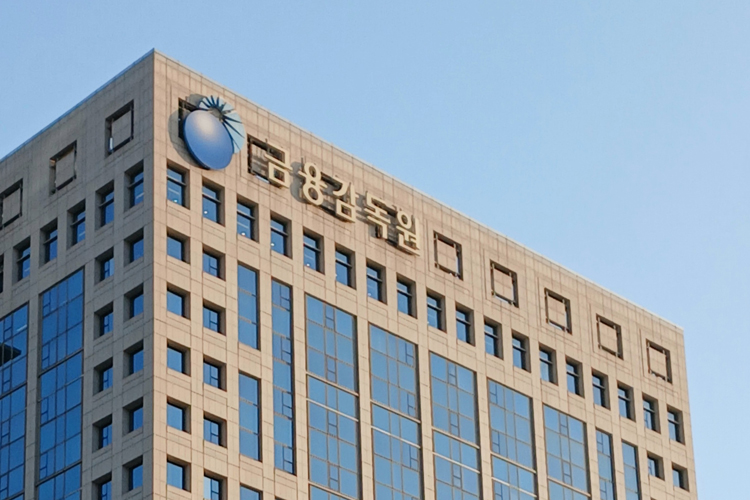
South Korea's Financial Supervisory Service has moved to manage risks as greater volatility in the local stock market raises concerns about investment losses in equity-linked securities (ELS).
The FSS said on Nov. 29 it held the fifth Consumer Risk Response Council meeting on Nov. 27 and discussed the possibility of consumer harm stemming from financial market instability and measures to improve sales practices across key financial sectors.
It plans to focus on loss risks in ELS issued with domestic stock indices and major individual stocks as underlying assets.
As of Nov. 6, outstanding ELS linked to the KOSPI200, Samsung Electronics and SK Hynix totalled 10.8 trillion won. Of that, outstanding knock-in products, in which principal-loss risk rises if the underlying asset price falls below a certain level, were tallied at 7.3 trillion won.
Through Nov. 25, the amount of products that actually entered the knock-in zone stood at about 24.2 billion won. Knock-in occurrences have been limited so far, but the FSS judges that more products could be exposed to principal-loss risk if stocks fall further.
If issuance of ELS tied to a specific stock becomes concentrated, it plans to guide issuers to diversify underlying assets. It will also check preparations for measures to improve the system related to ELS investor protection, scheduled to take effect next month.
It will also push ahead with work to improve the sales practices of private bankers at financial firms. This follows concerns that short-term performance-focused sales practices by PBs were identified as an issue during episodes of large-scale consumer harm involving ELS and overseas real estate funds.
The FSS plans to consider forming a joint task force with the financial industry and preparing related guidelines.
Inspections will also cover unsound sales practices surrounding a discount programme for switching contracts into fifth-generation indemnity insurance and optional discount riders, which took effect on Nov. 23. If improper switching that induces consumers to move to insurance contracts that disadvantage them is confirmed, it plans to immediately conduct on-site inspections.
It will also revise banks' internal rules and procedures for selecting designated legal scriveners to address the issue that fee information for scriveners designated by banks is not sufficiently provided to consumers in the process of non-face-to-face mortgage loans.
It will also review measures to check standards for calculating vehicle value depreciation when car leases are terminated early or reach contract expiry, and to strengthen advance notice to consumers.
The council cited artificial intelligence-based cyber threats, leveraged stock investing using broker credit loans, and false or exaggerated advertising of financial products as key risk factors for financial consumers in 2027.
It also identified as major management targets insurance fraud by insurance planners affiliated with corporate insurance agencies, excessive prepayment fees in smaller financial sectors, and an increase in complaints related to insurance disputes.
FSS Governor Chan-jin Lee (이찬진) stressed the need to respond strictly to unfair business practices by financial firms and acts that disrupt capital markets. He also said responses to risks such as cyber threats should be at a different level, including bold investment led by management and stronger internal controls.
 Sangyeop Oh
yub@d-today.co.kr
Keyword
#Financial Supervisory Service #ELS #KOSPI200 #Samsung Electronics #SK Hynix
