
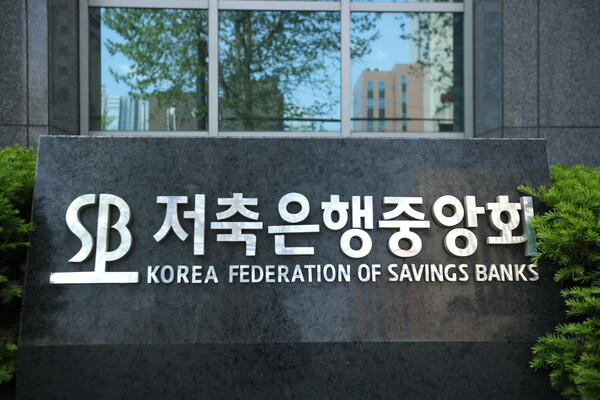
Savings banks posted a cumulative net profit of 885.6 billion won through the third quarter this year, extending a run of profits for three straight quarters. Asset quality indicators such as the delinquency rate and the substandard-or-below loan ratio also improved, but profit growth slowed as rising deposit rates lifted interest costs.
The Korea Federation of Savings Banks said in its preliminary third-quarter results for 2026 that the sector's cumulative net profit for the third quarter period totalled 885.6 billion won.
Quarterly net profit was 333.8 billion won in the first quarter, 432.0 billion won in the second and 119.8 billion won in the third. Gains on securities and a drop in loan loss provisions contributed to profitability, but profitability slowed somewhat in the third quarter as interest costs rose due to higher deposit rates and non-interest income fell.
Total assets at savings banks stood at 123.9 trillion won as of the end of September, up 3.3 trillion won from the previous quarter. Loans rose 900.0 billion won to 96.7 trillion won, while deposits increased 3.8 trillion won to 104.2 trillion won.
Asset quality indicators improved slightly. The delinquency rate fell 0.1 percentage point from the previous quarter to 6.2 percent, and the substandard-or-below loan ratio dropped 0.2 percentage point to 8.0 percent. Continued sales and write-offs of bad loans and an increase in loan balances affected the figures.
The Bank for International Settlements capital ratio came to 15.5 percent, down 0.2 percentage point from the previous quarter, but remained above the statutory requirement. The liquidity ratio and the loan loss reserve ratio also stood above regulatory standards at 133.3 percent and 107.9 percent, respectively.
The Korea Federation of Savings Banks projected that the sector would remain profitable in the fourth quarter. It expected the increase in net profit to be limited due to rising interest costs from policy rate hikes and uncertainty in capital markets.
The savings bank sector plans to strengthen soundness management by clearing bad loans. It also plans to diversify its business base through mid-sized corporate lending and loans linked to online investment-linked finance businesses, and to expand the supply of financial services to low and medium credit borrowers.
 Ji-young Lee (이지영)
ljy@d-today.co.kr
Keyword
#Korea Federation of Savings Banks #BIS #delinquency rate #substandard-or-below loan ratio #liquidity ratio
