
Some on the ground said outdoor mobile robot services face operational difficulties because of resident reports and elevator-use issues even if the robots obtain operation safety certification and take out liability insurance. They also pointed to limits to tax support such as corporate tax cuts for robot companies that struggle to make a profit.
Kim Jun (김준), head of the Industrial Policy Team at the Korea Institute for Robot Industry Advancement, said on Nov. 27 that civic education and campaigns should go hand in hand with efforts to overhaul systems for robot operations. He made the remarks at an academic seminar titled "Designing new norms for human-robot coexistence in the era of Physical AI," co-hosted by law firm Lee & Ko and the Korea Internet Ethics Association at Hanjin Building in Jung-gu, Seoul.
Kim cited cases in which residents reported to police to ask whether a robot had permission to operate after it travelled on a sidewalk despite having completed certification and insurance sign-up. He also cited a case in which a city council member raised robot operations in the district as an issue during a Seoul city administrative audit.
The current Intelligent Robots Act includes a safety certification system for outdoor mobile robots to operate on sidewalks. Operators of certified robots must join liability insurance or a mutual aid scheme to prepare for potential loss of life or property damage during sidewalk operations.
Inside buildings, the order of elevator use was cited as an operational challenge. Kim said that if a delivery robot keeps yielding to elevator users in a building without a freight elevator, deliveries can be delayed. As people and robots share the same space, he said operating rules that can be applied on the ground, such as elevator-use order, are also needed.
Bills have been introduced in parliament including a full revision bill for the Intelligent Robots Act and a special bill on the safe use and commercialization of mobile robots. Kim said the full revision bill places weight on robot product safety, while the special bill addresses operating standards to apply in actual use spaces such as apartment complexes, buildings and parking lots. He said both standards should be considered together because risk varies depending on where a robot works and what it does.
Kim said there are limits to support through corporate tax cuts in a situation where robot companies struggle to make profits. He said companies with no corporate tax to pay may not be able to immediately benefit from tax reductions.
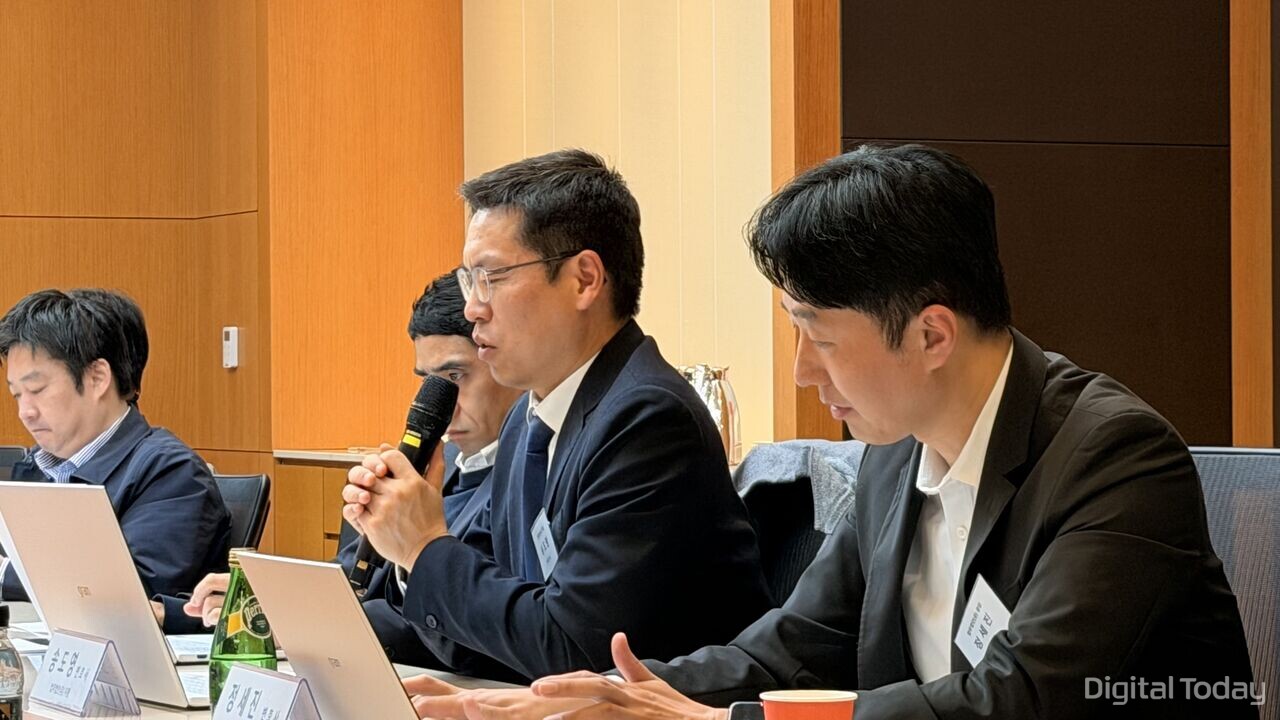
Jeong Se-jin (정세진), a lawyer at Lee & Ko, said, "When judging robot safety, you need to examine the space where the robot moves and the operating system along with the individual product." He said there is a need to review how building facilities such as elevators actually link with robots, and to set rules on when robots must be re-certified if software updates change routes or autonomy.
Securing insurance was cited as a challenge during the pre-commercialization demonstration phase. The industrial convergence regulatory sandbox demonstration exemption is a system that allows products or services that are difficult to test under existing regulations to be tested within a defined area, period and scale. In principle, operators granted the exemption must take out liability insurance for accidents, and if enrollment is difficult they must consult the trade ministry.
Song Do-young (송도영), a lawyer at Jipyong LLC, said some operators struggle to find insurance products or special clauses needed for demonstrations. He said, "In robot accidents, manufacturers, AI developers, operators and building managers can all be intertwined, making it difficult for victims to identify the cause and the responsible party, so the insurance system must be set up so that victims can be compensated quickly even while responsibility is being clarified."
 Seulgi Son
sageson@d-today.co.kr
Keyword
#Intelligent Robots Act #Korea Institute for Robot Industry Advancement #regulatory sandbox #Seoul #Physical AI
