
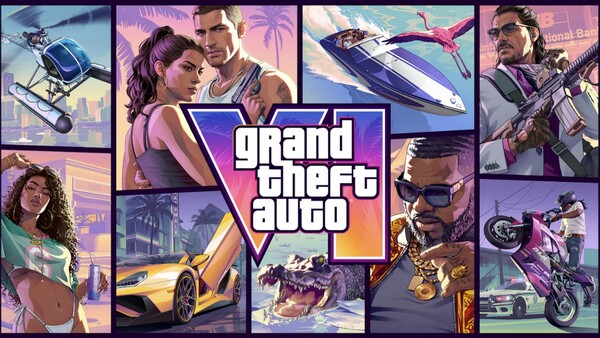
As Anthropic completed what was described as the largest-ever initial public offering, GTA 6, made without generative artificial intelligence, posted record success and again highlighted the value of human creativity.
On Nov. 26, TechCrunch said that while the AI industry has emphasized efficiency, a game Rockstar Games crafted over more than 10 years has gripped the market. It said the two events showed opposing currents around the future of creation.
GTA 6, released after 13 years, scored 99 on Metacritic, placing it among the highest-rated games of all time. Rockstar Games said global retail sales on the first day totaled $3.79 billion, topping the $2.9 billion for the film "Avengers: Endgame" and $2 billion in revenue from Taylor Swift's "The Eras Tour". It added the figures use different measurement standards.
The success also ties to what it means for content made directly by humans in the AI era, beyond the long wait. Even startup founders adjusted their schedules to play. Dima Beseda, co-founder of Speeree, said he reshuffled work plans to play over the weekend and even booked vitamin IV drips to maintain stamina. Some users who had waited since childhood pulled out dust-covered consoles and reminisced.
Ben Feder (벤 페더), managing partner at TIRTA Ventures and former chief executive officer of Rockstar Games parent Take-Two Interactive, said GTA could be the last game made in the way it is produced now. GTA 6 was made without using generative AI at all. About 5,000 people took part in development for more than 10 years, and Rockstar Games implemented the in-game world in detailed, hands-on fashion rather than relying on procedural auto-generation. It also created 30,000 non-playable characters with different appearances and personalities.
That production approach contrasts with the efficiency the AI industry pursues. The AI sector seeks to raise productivity by entering prompts into large language models to get results quickly and automate repetitive tasks. It has also brought side effects such as the spread of low-quality AI content on YouTube, court cases citing precedents that do not exist, and mass layoffs at technology companies. Meta promoted a "year of efficiency" and laid off tens of thousands of employees.
The gaming industry also faces concerns that AI could replace developers' roles. Google's "Project Genie," unveiled early this year, enabled users to generate and explore a 3D world based on prompts entered into an LLM. As some game company shares fell at the time, uncertainty grew among investors about the future of game developers.
Strauss Zelnick (스트라우스 젤닉), chief executive of Take-Two Interactive, pushed back, calling it a "ridiculous idea" that an individual could press a single button using only AI tools to make a hit and sell it worldwide. Mark Zuckerberg, Meta's CEO, said AI that understands users and generates personalized content would arrive soon. Elon Musk also claimed AI could create games on its own to match users' tastes.
TechCrunch described the timing of Anthropic's listing and GTA 6's success as "Grandthropic." It said that while AI companies promote technology that removes inefficiency, GTA 6 showed that trial and error, repeated revisions and long production times can raise a work's completeness.
Feder said great works of art are generally made slowly, and reaching a masterpiece requires discarding many ideas and refining them again. For complex games in particular, he said such revisions require enormous costs and time, but that is the essence of creation.
Another feature of GTA 6 is that it has users experience daily life in the game slowly. In the 212GB game, early missions begin with running errands or building a wall for a girlfriend. There are also chases and shootouts, but the detailed elements of everyday life and the experience of exploring a vast world are cited as the game's appeal. It is also meaningful in that, in an era overflowing with personalized content, many people enjoyed the same work and shared a single cultural experience.
 Yu Seung-a
ysah@d-today.co.kr
Keyword
#GTA 6 #Rockstar Games #Anthropic #TechCrunch #Take-Two Interactive
