
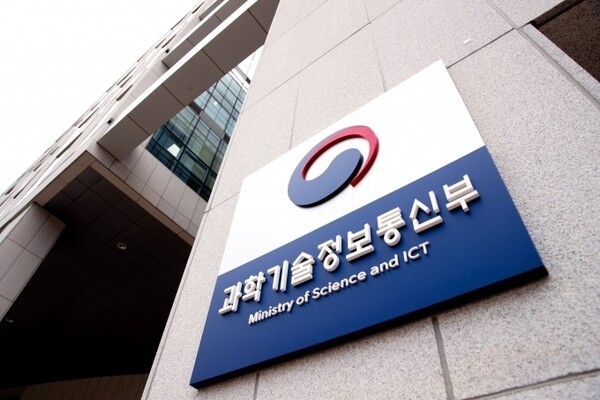
South Korea won a 10th consecutive term on the International Telecommunication Union (ITU) Council. It also elected a member to the Radio Regulations Board (RRB), which deals with international radio regulations, laying the groundwork to expand its influence in discussions on AI and digital policy and international norms for future communications.
The Ministry of Science and ICT said it achieved the results at the ITU Plenipotentiary Conference held in Doha, Qatar, from Nov. 9 to 27.
South Korea was elected joint ninth among 15 candidates from the Asia-Pacific region in the ITU Council election. It has now maintained its ITU Council seat for 10 consecutive terms since 1989. In the RRB election, candidate Jong-min Park (박종민) won with 136 votes. It was the first time South Korea has produced an RRB member since 2002.
The ITU Council is a key decision-making body that oversees major policies and strategies, budgets and organisational operations. The RRB is a specialised body that deliberates on regulatory and technical matters related to the application and interpretation of international radio regulations, and the use of frequencies and satellite orbits.
The ministry said it expects the results to enable South Korea to play a leading role in discussions on international norms in future communications fields such as 6G and low-Earth orbit satellite communications.
It also achieved results in shaping global digital policy agendas. At the meeting, about 60 proposals were approved and adopted, including new resolutions and revisions to existing ones, based on about 280 submissions from countries. Of these, revisions led by South Korea totalled nine.
Proposals were reflected to narrow the digital divide by considering service quality and usage conditions along with expanding the rollout of communications networks. The meeting also adopted provisions to consider accessibility for people with disabilities from the design stage of new technologies and to incorporate a gender equality perspective into policies and standards. It also included measures such as expanding youth participation in standardisation activities and establishing national strategies for online child protection.
Min-jung Park (박민정), deputy senior research fellow at the Korea Information Society Development Institute (KISDI), served as vice chair of the Committee on Policy and Legal Matters. She presented policy and technical alternatives on major international issues and contributed to building consensus among member states. South Korea's delegation held bilateral and multilateral consultations with officials from major countries and international organisations during the conference and also discussed ways to expand cooperation in AI and digital technologies and future communications.
Kyung-hoon Bae (배경훈), deputy prime minister and minister of science and ICT, said, "The achievements at this plenipotentiary conference are the result of recognition of the Republic of Korea's outstanding ICT capabilities and its contributions to the international community." He added, "We will continue to cooperate closely with the international community and play an active role in shaping global digital agendas so that AI and digital technologies can contribute to humanity's shared development and prosperity."
 Jin-ho Lee
jhlee26@d-today.co.kr
Keyword
#International Telecommunication Union #Radio Regulations Board #Ministry of Science and ICT #Doha #KISDI
