
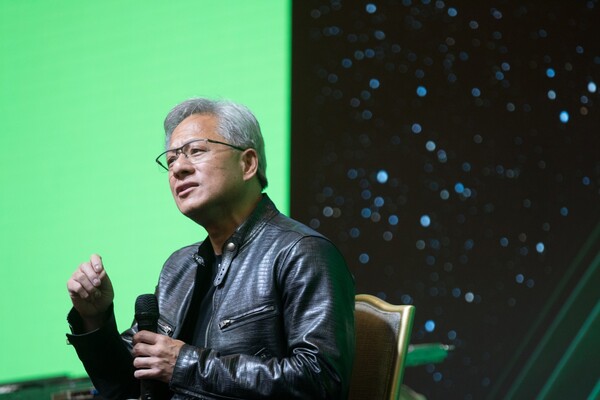
A debate over legal liability is growing over Nvidia's board decision to bring Jensen Huang back as chief executive officer and a board member. A professor at Yale School of Management warned that directors could face an unprecedented level of personal legal liability, saying the board approved the reinstatement without sufficient investigation or outside expert judgement.
On Nov. 25, TechCrunch reported that Jeffrey Sonnenfeld (제프리 소넨펠드), a professor at Yale School of Management, sharply criticised Nvidia's board for approving Huang's return. He raised the possibility that directors could bear a historic level of personal liability and argued there were serious problems in the decision-making process.
Sonnenfeld took issue with the board reversing its earlier position without making sufficient use of outside experts and before completing its own review. He also said reinstating Huang not only as CEO but also as a board member could weaken independent oversight and checks.
Suspicions of political involvement are also adding to the controversy. Nvidia's board chair had all but ruled out Huang's return until just a few days earlier, but later changed course after a weekend private call led by U.S. Vice President JD Vance and direct persuasion by President Donald Trump, the report said. Trump told CNBC in an interview, "I made the deal."
Sonnenfeld stressed that political guarantees or intervention do not exempt directors from legal liability. He said shareholder lawsuits could proceed separately even if a federal-level probe is halted, and additional suits could be filed on top of existing litigation.
Nvidia's legal disputes are expanding. After a class action lawsuit was filed against the company and Huang, shareholder derivative suits seeking to hold directors accountable also followed. Three additional suits were filed shortly after an earnings announcement on Nov. 18. So far, there are five related cases, all filed in U.S. federal court for the Northern District of California.
The cases differ in nature. The class action focuses on seeking compensation from Nvidia and Huang for investor losses. The shareholder derivative suits examine whether the board ignored warning signs involving ties to a suspected Chinese spy, among other issues. If damages are awarded in a derivative suit, the amount would go to Nvidia rather than individual shareholders.
Nvidia is also facing multiple regulatory and investigative risks. These include a U.S. Justice Department antitrust probe, reports of an accounting-related investigation by the Securities and Exchange Commission, the possibility of review by the Federal Bureau of Investigation, a California subpoena and a congressional inquiry. Huang has agreed to testify at a Senate Banking Committee hearing scheduled for next week. Nvidia partner Megaspeed was added to a U.S. trade blacklist on Nov. 24.
Sonnenfeld particularly pointed to Nvidia's semiconductor exports to China as a serious issue. He argued that "Nvidia is harming, rather than supporting, America's global industrial competitiveness." Despite U.S. export controls, he said, cutting-edge Nvidia chips flowed into China and were used in systems including those at Northwestern Polytechnical University, a Chinese military institution.
He also questioned the competitiveness of China's AI industry. Sonnenfeld argued that China's open-source AI models did not achieve results through their own innovation alone, but imitated by using high-performance Nvidia chips to distill outputs at the level of Anthropic. "Now we know why those results happened. They are stealing," he said. Nvidia, however, has denied reports that its most advanced chips were smuggled into China.
Sonnenfeld also argued that Huang's return was not necessarily needed to maintain Nvidia's technological competitiveness. He cited co-founder Chris Malachowsky as a key figure in GPU design and Ian Buck as a leading figure in CUDA software development. Since core technical talent was not leaving the company, he reasoned that Huang's return was not essential to running the company.
Internal ethics issues cited as the reason for Huang's resignation also drew criticism. Sonnenfeld said, "If the CEO does not follow the code of conduct, the standard loses enforceability inside the organisation." He argued that a relationship with a subordinate could undermine objectivity in personnel decisions, resource allocation and product decisions. He said organisational unfairness could arise whether the relationship continued or ended.
The controversy is expanding beyond a simple executive reinstatement into a test of Nvidia's corporate governance, compliance with export controls to China, cascading lawsuits and regulatory responses. With the decision to reinstate Huang fuelling debate over board responsibility, upcoming congressional hearings and litigation developments are emerging as factors that could increase Nvidia's management burden.
 Jinju Hong
hongjj@d-today.co.kr
Keyword
#Nvidia #Jensen Huang #Yale School of Management #JD Vance #Donald Trump
