
Concerns have been raised that provisions in talks on enacting an integrated media law spanning broadcasting and online video services (OTT) should be reviewed because they run counter to the government’s stance of easing pay-TV regulation. A proposed integrated bill in parliament, the Audiovisual Media Service Act, would keep existing fee and terms regulations and also revive a combined market-share cap that expired in 2018.
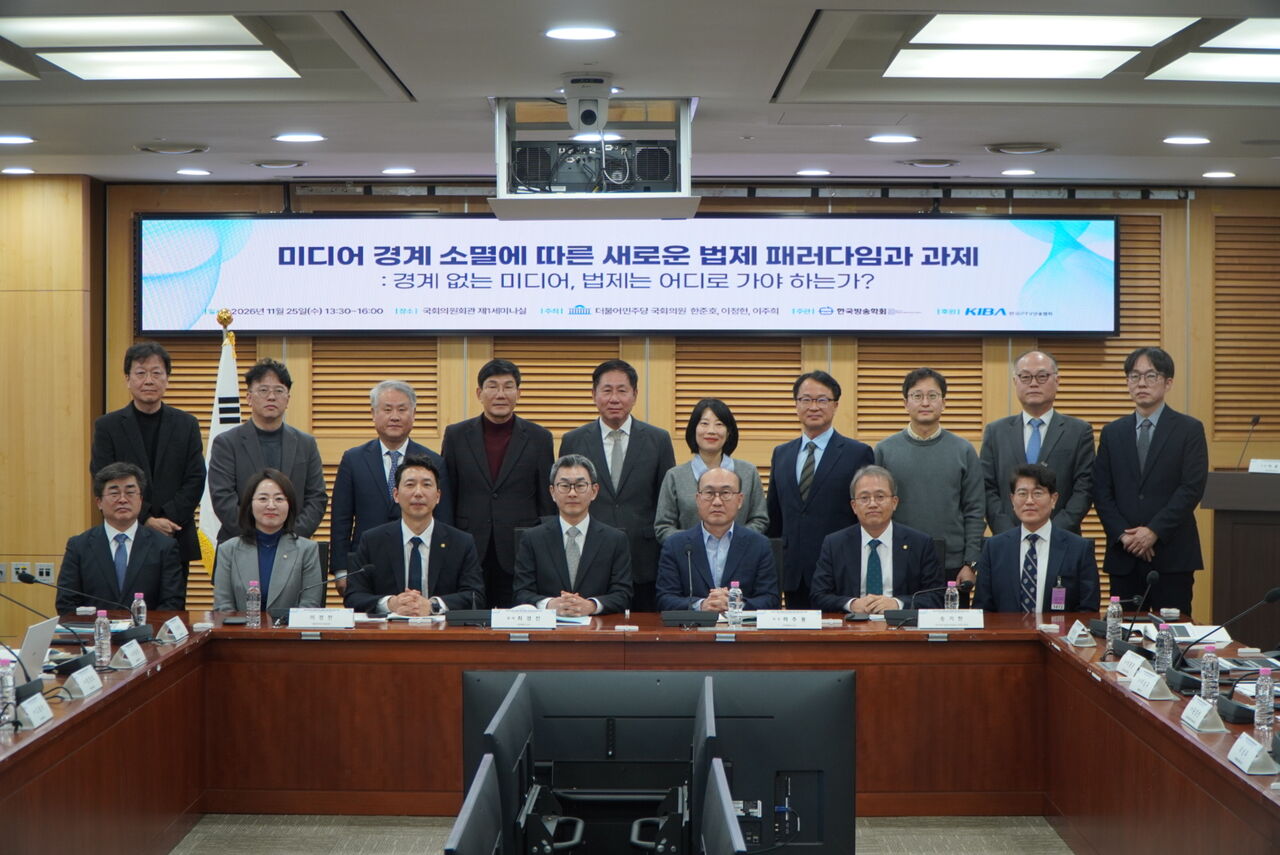
Choi Kyung-jin (최경진), a professor at Gachon University’s law school, said at a policy forum titled "A new legal paradigm and tasks as media boundaries disappear" held on Tuesday at the National Assembly Members' Office Building in Yeouido that legislative directions conflict between bills to ease rules on individual pay-TV services and the integrated media bill.
"The direction of previously proposed amendments to individual laws is not the same as that of the integrated bill," Choi said. "The integrated bill still treats whether facilities are owned as an important criterion, and it keeps the fee approval system. There are also provisions that appear to reintroduce the combined regulation," he said.
The government has pushed to ease pay-TV regulation to strengthen the competitiveness of South Korea’s media industry. Through the 2020 "Digital Media Ecosystem Development Plan" and the 2024 "Media and Content Industry Convergence Development Plan," it presented scrapping limits on market share and easing fee regulation.
In the National Assembly, amendments to the Broadcasting Act and the IPTV Act in line with that direction have been proposed one after another. They include scrapping limits on ownership and market share for pay-TV operators under a bill by lawmaker Han Min-soo, switching fee approval for some products to a reporting system under a bill by lawmaker Kim Woo-young, and abolishing procedures to accept reports on terms of use under a bill by lawmaker Lee Hae-min.
But the Audiovisual Media Service Act, which would integrate the Broadcasting Act and the IPTV Act and include OTTs in its scope, was designed in a different direction. The bill, proposed in June by Democratic Party lawmaker Choi Min-hee, keeps existing fee and terms regulations and maintains a 49 percent cap on stakes in pay-TV operators held by newspaper companies and news agencies. It also includes provisions to reintroduce the combined market-share cap, limiting pay-TV operators’ subscriber-based market share, including related parties, to one-third.
Choi said if services have similar functions and influence from two perspectives of function and influence rather than media characteristics, they should face similar regulation. He suggested easing ex ante regulation on existing broadcasters while strengthening ex post regulation to ensure fair competition and protect users.
Lee Sang-gyu (이상규), a professor in the media communication department at Kangwon National University, also said the Audiovisual Media Service Act has aspects that conflict with the overall direction of deregulation. Still, he said focusing only on easing regulation of existing broadcasters could leave global platforms outside regulation, and he proposed steps such as appointing domestic agents, sanctions for violating obligations, and making submission of domestic sales and content transaction data mandatory.
Lee Jong-gwan (이종관), a senior specialist at law firm Shin & Kim, pointed to problems in which talks on an integrated media law drag on due to conflicts among stakeholders, delaying improvements to individual regulation. He stressed the need for a two-track approach that pursues enactment of the integrated media law and improvements to individual systems in parallel.
At the forum, terrestrial broadcasters and the IPTV industry shared a view on the need for regulatory improvements beyond their interests. Lee Seong-joo (이성주), head of the Korea Broadcasting Association and president of MBC, and Yoo Yong-hwa (유용화), head of the Korea IPTV Broadcasting Association, attended together and urged ensuring regulatory fairness between domestic broadcasters and global platforms.
Lee said there is a sense of crisis that the entire ecosystem could collapse, including the content production sector, broadcasters, local OTTs and IPTV. He added that while industry groups may have conflicting interests, they should move forward together to enact the integrated media law. He called for discussions to also cover measures to secure financial resources corresponding to public responsibilities.
Yoo said boundaries between media have disappeared, but laws and regulations that are more than a decade old still dominate the market. "Protecting the public interest and tying the market’s hands and feet are different," he said. "Public responsibilities should be firmly upheld, but autonomy and creativity should be allowed to work in the market," he added.
The Broadcasting, Media and Communications Commission plans to pursue amendments to individual laws and enactment of the integrated media law in parallel. Since early this year, it has gathered views from experts, businesses and user groups, and since July it has held discussions with commissioners and set the broad framework for the integrated media bill. It is also in talks on forming a social consultative body with the Office for Government Policy Coordination to discuss detailed legislative issues.
Yoon Young-ran (윤영란), head of the commission’s media system innovation team, said it is unclear whether an amendment to the Broadcasting Act or enactment of the integrated media law will move first, so both steps are being pushed at the same time. She said the views presented at the forum would be reflected in the legislative process.
 Seul-gi Son
sageson@d-today.co.kr
Keyword
#Audiovisual Media Service Act #OTT #National Assembly #Korea IPTV Broadcasting Association #MBC
