
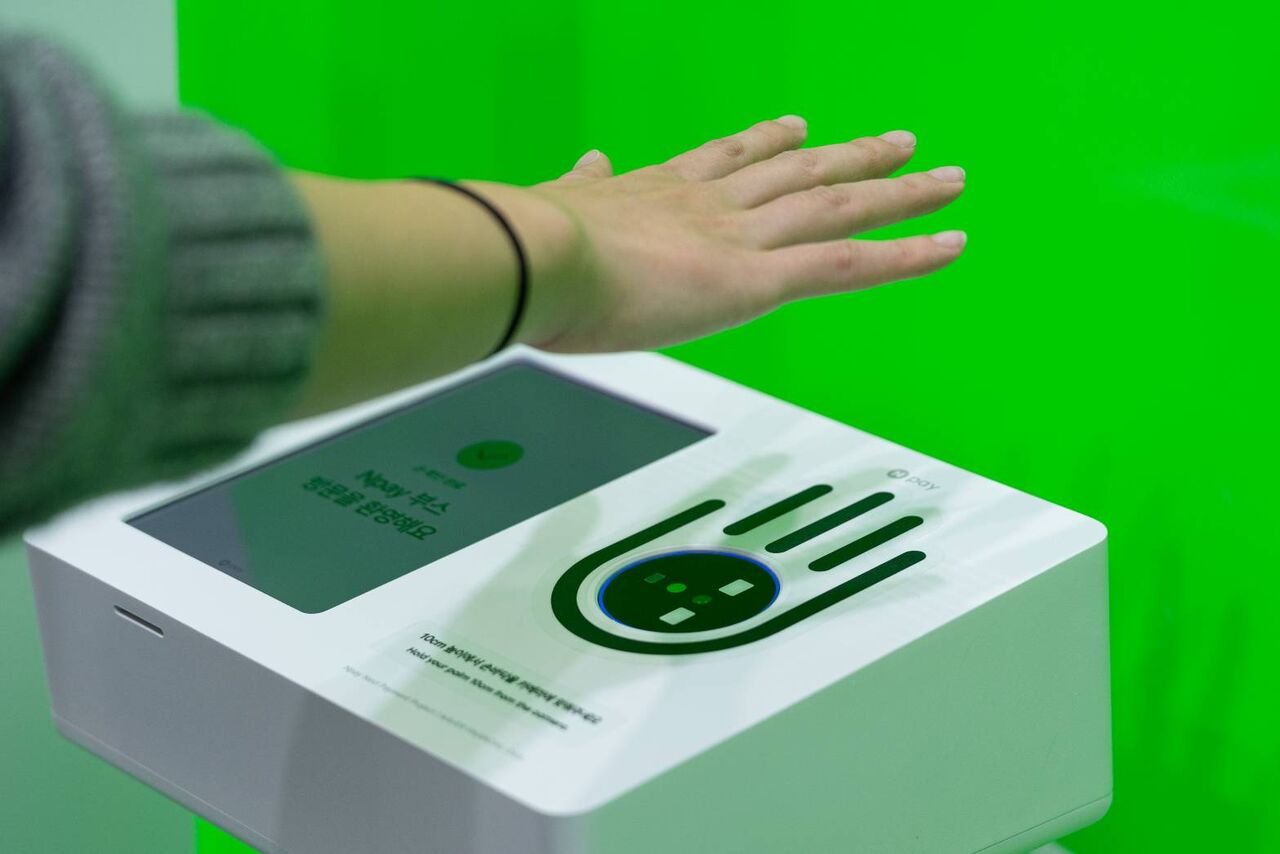
Naver Pay unveiled 'Handsign,' a next-generation biometric authentication technology that recognises palm veins for payments. It demonstrated a service that allows users to pay hospital medical bills using only their palm, without a card or smartphone, and then proceed to file a reimbursement insurance claim. The company is moving to expand its offline payment technology.
Naver Pay said it will participate in Korea Fintech Week 2026, which runs from Nov. 25 at the aT Center in Yangjae, Seoul, and showcase a prototype of 'Npay Handsign,' a payment technology based on palm vein authentication.
Handsign verifies identity by recognising veins under the palm using near-infrared light. It is positioned as a next-generation biometric authentication method following the existing facial authentication service Facesign, and Naver Pay is currently conducting internal technical verification.
At the event, Naver Pay will demonstrate the process of paying hospital medical bills by connecting a palm vein reader to its offline integrated terminal, 'Npay Connect.' After payment, users can move to the 'Npay insurance claim' service via a smartphone notification and check the process of filing an insurance claim without separate documents by linking to 'Silsong24.'
The insurance claim service uses MyData to check payment records at clinics, hospitals and pharmacies and to retrieve insurer information and the account details for receiving insurance payouts.
Visitors can also try Facesign, the existing facial authentication service, and 'Connect Cam,' which supports facial authentication payments when connected to a kiosk. Connect Cam is scheduled for release in December.
Naver Pay CEO Sang-jin Park (박상진) said, "From palm vein authentication technology to data-based business analysis reports, we are continuing to invest so that payment services can expand with new technology and financial experiences." He added, "We will continue new attempts."
 Ji-young Lee
ljy@d-today.co.kr
Keyword
#Naver Pay #Handsign #Npay Connect #Korea Fintech Week 2026 #Facesign
