
As AI advances to a stage where it makes its own judgments and acts, discussion is intensifying over a new regulatory framework to respond.
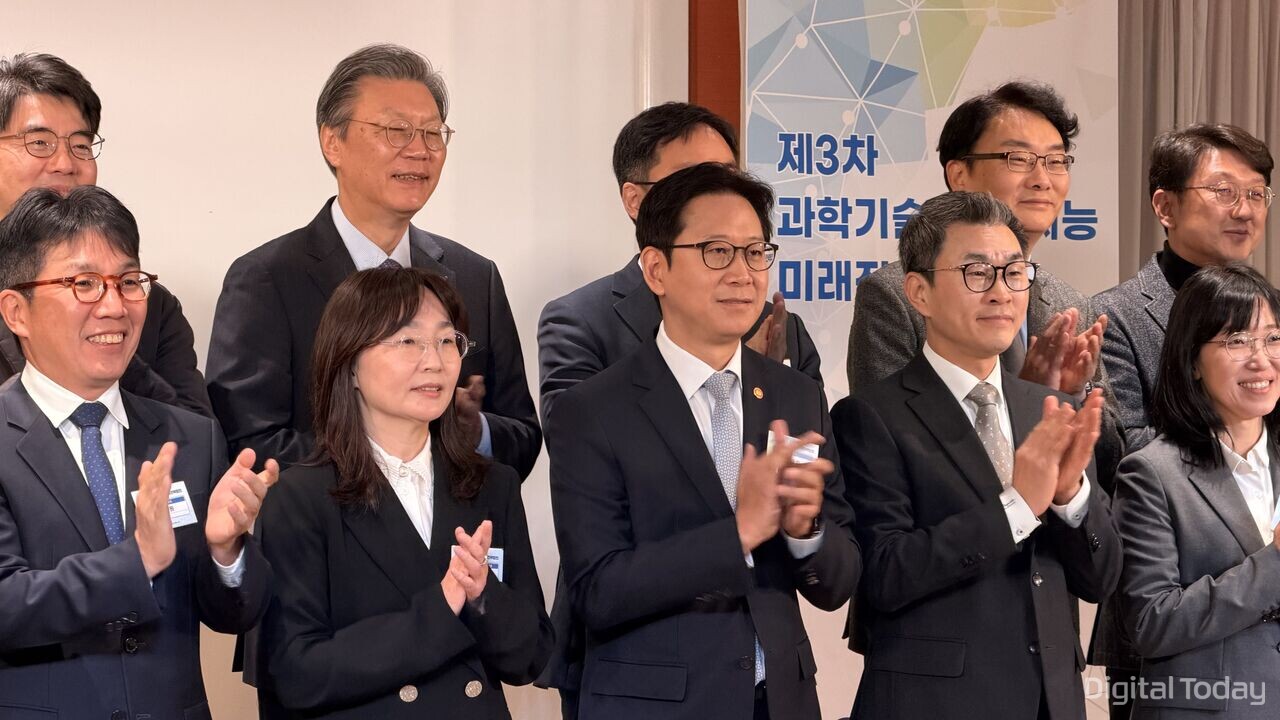
At the third Science and Technology and AI Future Strategy Meeting held on Tuesday at the Royal Hotel Seoul in Jung-gu, Seoul, and chaired by Deputy Prime Minister and Minister of Science and ICT Bae Kyung-hoon (배경훈), experts from various fields called for legal and institutional design spanning the entire lifecycle of AI development and use, from a licensing system for R&D personnel to AI registration and identification and liability insurance.
Bae said comprehensive discussions are needed on social threats and responses, as well as industrial and economic changes, to prepare for an era in which AI learns and develops on its own.
Yoon Hye-sun (윤혜선), a professor at Hanyang University Law School, who presented under the theme, "Conditions for a country that uses AI well: Legal and institutional strategies in the era of acting AI," suggested there is a need to redesign existing regulatory and liability law as AI agents and physical AI spread.
Existing regulation was designed to treat businesses as the regulated entities and manage risks through pre-launch reviews. But individuals can also develop and operate AI agents, and as AI acts autonomously after launch, new risks emerge, shaking the overall regulatory system, including regulated entities, standards and timing, the professor said.
It is also difficult to determine who is responsible when an accident occurs. That is because AI behavior is hard to predict in advance, making it difficult to judge negligence, and because multiple companies and systems are involved in execution, making it hard to prove causality between the cause of an accident and damage.
Yoon said it would be difficult to solve such problems with existing policy tools such as enacting promotional legislation or granting regulatory exemptions. Promotional legislation supports industry while keeping the existing regulatory framework, and regulatory exemptions allow exceptions case by case for individual businesses. She said it is difficult to specify which cases qualify for exemptions given AI’s changing nature after launch, and it is also hard to resolve structural limits in liability law.
Yoon presented four principles for designing AI regulation: providing incentives for safe development and use; minimizing the cost of trust; feedback loops between risk outlooks and regulatory outcomes; and forming a regulatory ecosystem. She said a consistent regulatory order should be established by linking systems organically rather than adding individual rules.
She also proposed a regulatory system spanning five stages: securing data, research and development, market entry, service operation and post-accident compensation.
At the data-securing stage, she said a comprehensive order of use is needed on who can use what data under what conditions, rather than relying on exemptions in individual laws such as the Personal Information Protection Act and the Copyright Act.
At the R&D stage, she proposed granting graded licenses to individual R&D personnel instead of prior approval for each experiment and product. Licensed developers who have completed training, ethics verification and safety education would conduct R&D within the scope of their licenses without separate approvals.
At the market entry stage, she proposed registering AI systems that have authority to affect others and their operators, and assigning unique identifiers. This would make it possible to identify the AI operator like a vehicle license plate and keep key behavior records to determine responsibility when accidents occur. AI agents used in a private setting would be excluded from registration.
At the service operation stage, she said resilience is needed to rapidly detect abnormal behavior and suspend and restore AI operations, along with security to prevent accidents.
As a remedy for damages, she proposed mandating AI liability insurance. AI service providers would bear primary responsibility and take out insurance, with costs reflected in service fees. Victims could be compensated before the cause of an accident is determined, and providers could lower premiums by developing safer AI. She also proposed that the state act as a reinsurer for large-scale damages that private insurers would have difficulty covering.
To support such systems, she said a future-risk outlook system, regulatory science to scientifically evaluate and verify AI safety, and an information management system to feed operational and accident information back into policy are also needed. She also proposed a phased approach, with pilot operations and standards set by 2030 and legislation by 2035.
"Regulation is a national strategy and national infrastructure," Yoon said, stressing that beyond being a country that makes AI well, a country that designs systems well and uses AI well will secure competitiveness.
The Ministry of Science and ICT plans to reflect the discussion in policy by proactively responding to industrial and social changes resulting from greater AI autonomy and identifying mid- to long-term tasks spanning technological innovation, stronger industrial competitiveness and the securing of social trust.
Bae said there has been much discussion on the social ripple effects and impact of the era of generative AI, but that both government and companies still lack policy consideration for the era of agent AI. He said he would examine policy response measures related to agent AI more closely based on the opinions presented by committee members.
 Seulgi Son
sageson@d-today.co.kr
Keyword
#Ministry of Science and ICT #AI agents #Hanyang University #Personal Information Protection Act #Copyright Act
