
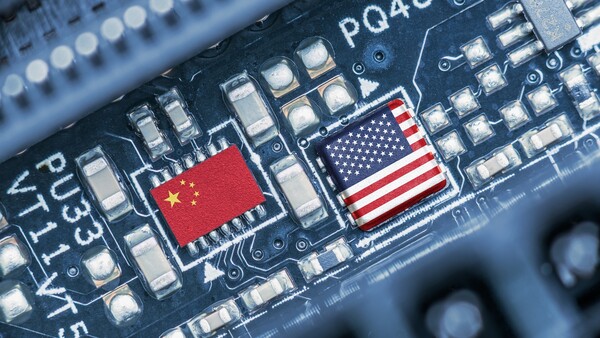
Nvidia CEO Jensen Huang's return has renewed focus on the importance of securing talent in the U.S.-China contest for AI dominance. The United States is checking China’s technological advances through curbs on exports of advanced semiconductors. China is accelerating training AI researchers and recruiting talent from overseas, complicating the competitive landscape.
On Nov. 25, CNBC reported that U.S. President Donald Trump cited the risk of key technical talent moving overseas as a reason for his involvement in Huang’s return. Trump said the United States must protect brilliant talent and claimed Huang would have been guaranteed any terms he wanted if he had gone to China. He added that China did not actually propose recruiting him.
Huang announced his resignation on Nov. 12 after controversy over a private relationship with a woman suspected of links to Chinese intelligence agencies. Nvidia’s board later gathered views from senior U.S. government officials and formally announced Huang’s return in a unanimous decision on Nov. 23.
Nvidia shares jumped 32 percent on the day the return was announced, adding more than $1 trillion in market value. The next day, the stock fell 5.9 percent as concerns resurfaced over corporate governance and legal risks. Global financial markets swung on management changes alone, even though there was no fundamental change in Nvidia’s semiconductor technology and product competitiveness.
China’s strength in AI talent is rising quickly. A study published in September by the Carnegie Endowment for International Peace found that, based on analysis using the Conference on Neural Information Processing Systems (NeurIPS), the share of major AI researchers working in China rose to 41 percent in 2025 from 27 percent in 2022. Over the same period, the U.S. share fell to 34 percent from 46 percent.
The share of researchers with bachelor’s degrees from China who work in China also rose to 69 percent from 57 percent. The analysis said the United States remains a key country for attracting overseas AI talent, but China is also building an industrial ecosystem that can keep its own talent at home.
Competition among Chinese companies to recruit overseas talent is also fierce. U.S. AI engineers are assessed to earn 2 to 3 times more than in China, but Chinese companies are seeking talent with high salaries and stock options. The report cited a case in which a Meta engineer working in Canada moved to a Chinese AI startup after being offered 1.4 million yuan (281.88 million won) in compensation and stock options.
Competition for technological dominance over advanced semiconductors is also continuing. The U.S. government said on Nov. 23 it would add Singapore’s Megaspeed and an Alibaba affiliate, among others, to an export control list over suspicions of rerouted exports of advanced AI semiconductors to China.
Nvidia said on Nov. 17 that it posted revenue of $115.8 billion in fiscal 2027 third-quarter results, up 103 percent from a year earlier. Data centre revenue rose 110 percent to $107.6 billion. It also began full-scale supply of its next-generation AI semiconductor platform, Vera Rubin. It did not reflect revenue from computing products for China data centres in its fourth-quarter revenue outlook.
Advanced semiconductors and AI researchers are mutually complementary. As China narrows the AI technology gap with the United States by pushing DeepSeek and other efforts, the ability to train, secure and retain key talent, as well as control semiconductor supply chains, is emerging as a major variable shaping technological dominance for both countries.
 Jae-won Choi
ittt_0801@d-today.co.kr
Keyword
#Jensen Huang #Nvidia #Donald Trump #NeurIPS #Alibaba
