
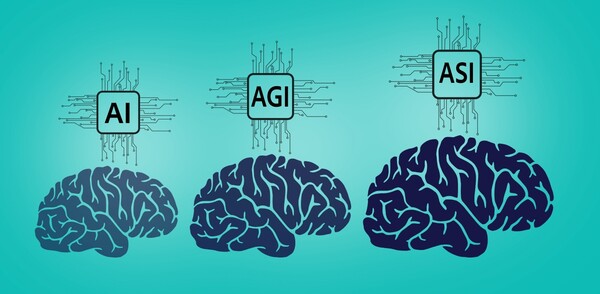
A Google DeepMind researcher argued that the next stage of AI development should prepare for superintelligence that consistently outperforms groups of human experts, beyond human-level artificial general intelligence (AGI).
On Nov. 24, online media outlet Gigazine reported that Google DeepMind research scientist Tim Gennain (팀 제네와인) said it is time to seriously examine the path beyond AGI as its realization draws closer.
Gennain defined ASI not as AI that is simply smarter than humans, but as a system that completes tasks that many human experts would carry out over years using fewer resources and in a shorter time. He said examples include making advances across scientific research far faster than expert groups, or having AI alone perform development at the level of semiconductor design that a large company would take a year to conduct.
He said methods are needed to identify progress strictly and reliably in preparing for the transition from AGI to ASI. He also said a clear point is that the fundamental limits of intelligence lie far beyond current AI or humans, and that a broad, largely unexplored region remains between human-level AI and the theoretical limit.
He cited expanding computing resources and falling AI costs as the key background to the argument. Gennain estimated that AI progress is driven by three factors — hardware manufacturing, algorithmic efficiency and computing investment — and that combined, the world's effective computing capacity is increasing at least 10-fold each year. If the trend continues, he said, in 10 years it would be possible to run today's level of AI agents in numbers greater than the world's population.
He also addressed changes on the cost side. He predicted the amount of computation needed to handle the same task could fall to one quarter each year. Cognitive work that currently carries token costs of 1 billion dollars when handled by AI could fall to about 1,000 dollars in 10 years, he wrote. If these changes continue, he said, many cognitive tasks could become standardised and cheaply procured, leading to the industrialisation of cognitive work. He added that just as mechanisation made physical labour widely procurable, standardisation and automation of cognitive work could rapidly spread across industries.
He drew a line, saying it is uncertain whether expansion in speed and scale alone reaches full AGI. That is because cognitive tasks that are difficult to handle without human help could still remain. Even so, Gennain wrote that once human-level AI is secured across a broad range of tasks and an environment is in place where billions of AI agents operate far faster than humans, that alone could become an opportunity to move from AGI to a weak form of ASI.
Gennain presented four paths from AGI to ASI. First is scaling models and data. He said qualitative capabilities of AI have improved consistently as model size and data have grown. Second is a shift in the technological paradigm. As current AI falls short of humans in areas such as continual learning, world modelling, decision-making and sample efficiency, he said researchers are divided on whether simple scaling can overcome limits or whether a fundamental shift is needed.
Third is stronger collaboration among AI agents. He said some see a possibility that collective agents or a virtual economy connecting thousands to millions of AGIs could create a form of superintelligence. He added that as scale grows, inefficiencies in collaboration increase, and institutional design is also needed to prevent misinformation spread, collusion and information manipulation. He also mentioned that some experiments have shown cases where agents displayed patterns of cheating and whistleblowing in a short time.
Fourth is recursive self-improvement. He described the idea that AI could automate the work of improving next-generation AI. Gennain said this approach could operate across model architecture, training algorithms, semiconductor circuit layout and data generation. He added that verification systems are needed to evaluate superhuman-level outputs in a short time.
Google DeepMind said that even if one path is blocked, others can work in complementary ways. Gennain said that if a certain approach stagnates amid economic and geopolitical competition, resources can shift to another approach. He added that even if recursive self-improvement does not accelerate indefinitely, AI could significantly exceed human-level AGI through increases in data, speed, efficiency and collaborative capability alone.
Finally, he emphasised that the possibility of rapid AI progress over the next 10 years should be taken seriously. He said that even without a dramatic leap in state-of-the-art AI, the industrialisation of cognitive work alone could significantly change knowledge work and the broader economy. He added that researchers, developers and policymakers should prepare together for changes across science, industry and society.
 Jinju Hong
hongjj@d-today.co.kr
Keyword
#Google DeepMind #AGI #ASI #Tim Gennain #Gigazine
