
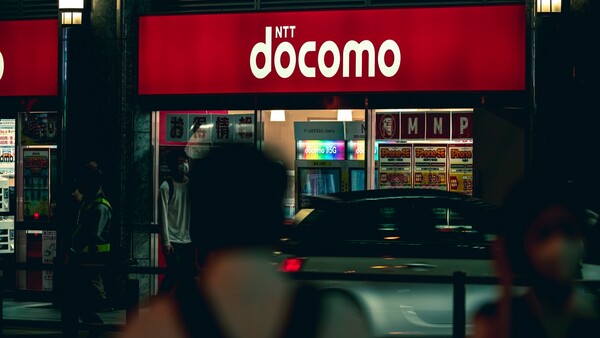
Japan's largest mobile carrier NTT Docomo has been hit by a string of network outages, putting its credibility at risk. It is accelerating a shift to 5G standalone (SA) to build next-generation communications infrastructure, but some analysts say earlier cutbacks in capital spending and differences in network-buildout strategies versus rivals affected service quality.
On Nov. 24, Japanese media outlet ITmedia reported that NTT Docomo caused nationwide service disruptions three times this month, on Nov. 5, 11 and 16.
All of the outages occurred on its 5G SA service, disrupting voice calls, data communications and text messaging. The first outage took about 14 hours to restore and affected up to 1,587,000 subscribers.
Japan's communications minister Hisayuki Fujii (후지이 히사유키) on Nov. 17 expressed regret over repeated disruptions to communications services, which are core infrastructure for daily life. He called for identifying the root causes and reviewing organisation-level risk management systems.
Controversy over Docomo's network quality has continued since 2023. The outlet pointed to Docomo's restraint in capital spending as it responded around 2020 to pressure from the Japanese government to cut mobile fees.
Docomo also differed from rivals in its 5G infrastructure strategy. KDDI and SoftBank expanded coverage by refarming existing 4G spectrum for 5G, but Docomo focused on building base stations using new 5G-only spectrum. It has since faced difficulties improving network quality as base station expansion slowed under investment constraints, the analysis said.
In an evaluation last month by market research firm Opensignal, Docomo ranked first in service coverage and 5G download speeds. It trailed KDDI in network reliability and consistent quality.
On Nov. 4, Docomo raised its fiscal 2026 capital spending plan to 900 billion yen from 857 billion yen. It plans to invest in improving communications environments along major rail lines and in densely populated areas, and in expanding 5G base stations.
A communications overload at switching equipment was cited as the direct cause of the three outages. The root cause of the repeated disruptions has not been identified. Securing 5G SA stability and restoring user trust has emerged as an urgent task for Docomo.
 Choi Jae-won
ittt_0801@d-today.co.kr
Keyword
#NTT Docomo #5G SA #KDDI #SoftBank #Opensignal
