
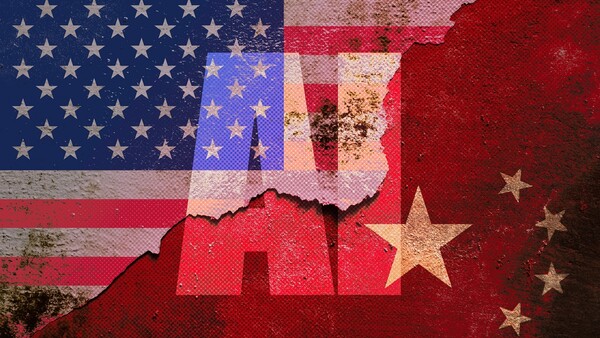
An analysis said the results of the United States' 2026 midterm elections could affect China's strategy toward the United States and competition for AI dominance. It said U.S. voters who react sensitively to the economic shock of war and local opposition to expanding AI infrastructure could become key considerations in China's strategy planning process.
In an opinion article published on Breaking Defense on Nov. 23, Dean Cheng (딘 청), a non-resident fellow at the Potomac Institute for Policy Studies, pointed to U.S. society's tolerance for conflict and scepticism about AI as issues the Chinese leadership would watch in the midterms.
Chinese military experts have analysed that the United States would find it difficult to sustain for a long period a war involving large-scale casualties. Cheng said that in this election, economic losses from war emerged as an important variable, rather than casualties.
It said higher international oil prices resulting from a military clash with Iran and the closure of the Strait of Hormuz increased the burden of inflation in the United States. It said this affected Republicans losing their majority status in both houses of Congress.
In an AP poll of midterm voters, concerns about living costs such as grocery prices, medical bills and fuel costs emerged as major voting factors. Government corruption and the need to check the president were also cited as important variables.
Cheng said China could be likely to use its influence over global supply chains, including consumer goods and rare earths, as a means of economic pressure in a future crisis over Taiwan. He added this was his personal view and that no specific response plan by the Chinese government has been confirmed.
U.S. social backlash against expanding AI infrastructure is also notable. Ballotpedia, a U.S. election information organisation, said that in 40 of 41 local referendums related to data centres held in 10 U.S. states on Nov. 3, the side seeking to restrict or oppose development won.
In a survey released by the Pew Research Center in September, 54 percent of U.S. adults said data centres have a negative impact on the environment. Those who said they adversely affect household energy costs reached 50 percent.
China, by contrast, is expanding industrial use of AI at the national level. China's State Council, through an 'AI Plus' action plan released last year, set a goal of raising the adoption rate of applications such as next-generation intelligent terminals and AI agents to more than 70 percent by 2027.
The United States' technological and capital advantages remain. A Stanford University '2026 AI Index' report said U.S. private AI investment last year was $285.88 billion, far above China's $12.41 billion.
The United States and China also discussed the Taiwan issue, economic and trade relations, and AI safety at a summit held in Shenzhen, China, on Nov. 19. Chinese President Xi Jinping emphasised communication and cooperation between the two countries to prevent safety risks from AI.
As U.S.-China rivalry expands beyond technology and military power to energy security, supply chain stability and social acceptance, the ability of countries to strike a balance between domestic public opinion and industrial competitiveness is also emerging as an important variable.
 Jae-won Choi
ittt_0801@d-today.co.kr
Keyword
#United States #China #Taiwan #Stanford University #Pew Research Center
