
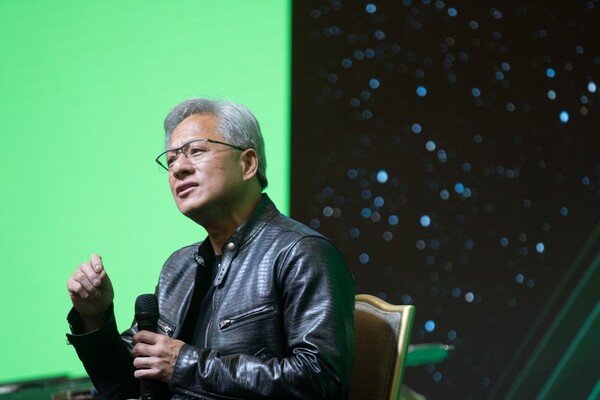
Jensen Huang (젠슨 황) returned to his roles as Nvidia chief executive, president and director, sending the company’s shares up more than 30 percent. Nasdaq also rose nearly 7 percent intraday, in a sign that investor sentiment toward artificial intelligence-related investments is quickly recovering.
Decryption, a blockchain media outlet, reported on Nov. 23 that the rebound showed the shock the founder’s absence dealt the market, rather than any management vacuum itself.
Huang stepped down on Nov. 12 after allegations emerged involving an affair and suspicions of Chinese spying linked to a former executive at a customer company, and returned to the front line of management after 11 days. Nvidia’s board said it judged his return would not create a national security risk, but an independent investigation has not yet finished.
Nvidia’s business did not stop because the founder was away. Chief Financial Officer Colette Kress served as interim CEO, and Harvey Jones became Nvidia’s first board chair. Kress presented quarterly revenue of about $116 billion and a forecast of about $130 billion for the next quarter, but those promises alone failed to calm market anxiety.
The internal shake-up was greater. At the first company-wide meeting without Huang, about 700 questions poured in, many focused on compensation and board transparency. Executives explained that the company could handle customer responses without Huang, but some employees were reported to have discussed even leaving Nvidia if his absence became prolonged.
Calls for his return from major shareholders and external figures also continued. Elon Musk also backed Huang’s return, and technology industry figures including Garry Tan and Tim Sweeney publicly lent support.
Support from U.S. President Donald Trump was also cited as a factor behind the decision to bring him back. Trump said his involvement was quite important, and the administration told the board there was no national security issue that would block Huang’s return.
That support coincided with a shift in the board’s stance. Jones said on Nov. 17 that Huang would not be brought back, but just six days later the same board unanimously voted for his return.
The process also left questions about Nvidia’s corporate governance. The board said it was satisfied with Huang’s sincerity and leadership after interviews, but it did not specify what had changed. Supporters saw it as a pragmatic judgment about an irreplaceable founder, while opponents interpreted it as the board yielding to strong outside influence.
Market reaction put a number on Huang’s personal influence. After his departure, Chinese customers delayed or cancelled orders, and shortly after news of his return some technology companies’ shares jumped more than 20 percent. It suggests Nvidia is seen not simply as a chip supplier but as a hub linking data centre investment, the software ecosystem, financing and policy decisions.
Still, the share rebound did not resolve every issue. Nvidia shares jumped from a Nov. 21 close of $125.53 to around $165, but they remain below the October peak. For investors, it amounts to paying a higher price again for the same chip sales outlook. Nvidia is creating a board committee to oversee national security and export-control compliance, and is also pushing to hire a chief compliance officer.
The remaining key variable is the profitability of AI investment. Nvidia’s growth can be sustained only if customers generate sufficient returns on large-scale infrastructure spending. Huang’s return restored the links connecting Nvidia, its customers, Wall Street and Washington, but it did not fully erase questions about leadership.
 Yoonseo Lee
yslee@d-today.co.kr
Keyword
#Nvidia #Jensen Huang #Nasdaq #Donald Trump #Decryption
