
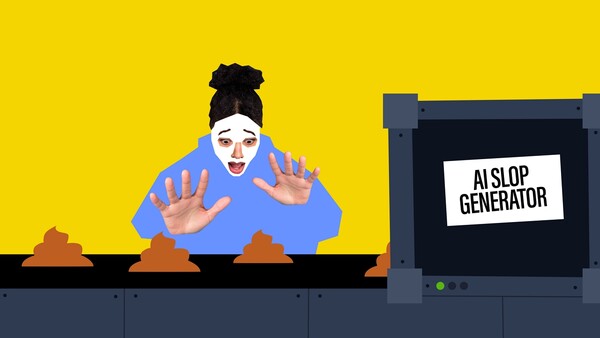
[DigitalToday reporter Choi Jae-won] As low-quality AI-made content known as AI slop floods social media, major platforms are moving to strengthen users' ability to choose what they see. Still, features that can completely block AI-generated material remain limited.
On Nov. 23, Engadget reported that Pinterest, TikTok and LinkedIn are offering tools to reduce exposure to AI content or curb the spread of low-quality posts.
Pinterest has enabled users to adjust how often AI content appears under "Improve your recommendations" in the settings menu. Users can lower the share of AI-generated image recommendations by category, including art, fashion, beauty, architecture, sports and food. It also supports a feature that reduces AI content in some search results.
TikTok offers a feature that adjusts how often AI-generated content is recommended through "Manage topics" in content preferences. It does not apply to all users.
On Nov. 19, TikTok also unveiled a separate verification service that can identify images and videos created or edited with its AI tools. The company said it has so far added related labels to more than 5 billion AI-generated videos on the platform.
LinkedIn is strengthening its classification system to identify low-quality posts and curb their spread. Users can report content suspected of being AI slop from post and comment menus.
LinkedIn said more than 1 million people used the feature within two weeks of its launch in August. Views of content classified as AI slop also fell 40 percent through related measures.
By contrast, Instagram, Facebook, YouTube and X (Twitter) do not have a separate exposure-limiting feature that targets only AI-generated content. Users can use features such as "Not interested" to reduce how often similar posts are recommended.
Instagram and TikTok also offer a feature to reset recommended content. On YouTube, users can delete viewing history to adjust what information is reflected in recommendations.
Still, a technical limitation is that metadata used to identify AI content can disappear during editing or reposting. Platforms are strengthening their responses, but fully blocking AI-generated material remains difficult.
 Choi Jae-won
ittt_0801@d-today.co.kr
Keyword
#Pinterest #TikTok #LinkedIn #Instagram #YouTube
