
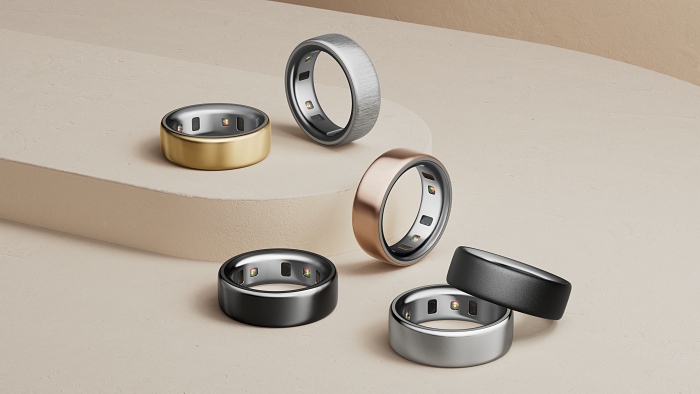
As the high price and subscription fees for the Oura Ring 5 weigh on buyers, alternative smart rings that allow users to check health data without a subscription are drawing attention. Competitors including Amazfit, RingConn and Samsung Electronics are targeting consumers with relatively lower prices or free health analysis features.
Engadget reported on Nov. 23 that the Oura Ring 5 starts at $399, but users must subscribe to a membership costing $5.99 a month or $69.99 a year to view detailed data such as sleep, recovery and health analysis.
Without a subscription, users can still see three basic scores for sleep, activity and readiness. But adding a two-year membership to the base model brings the pre-tax total to about $539. Its slimmer design and about a week of battery life are strengths, but the upfront cost and ongoing subscription fees can be a burden for consumers.
Competitors are seeking differentiation by eliminating subscription fees or lowering device prices. A key example is Amazfit's Helio Ring. It costs about $161, less than half the price of the Oura Ring 5. Users can check sleep, heart rate and recovery status in the Zepp app, and it also supports data integration with Amazfit smartwatches. Users can currently use Zepp Aura Premium for free.
But compromises are needed on specifications as well as price. The Helio Ring's battery lasts up to 4 days, and sizes are limited to 8, 10 and 12.
Renpho's Lynx costs $179.99 at a discounted price. It comes with a portable charging case and supports both iOS and Android. It also offers sleep, stress and activity tracking. But reviews say heart-rate measurement during exercise is inconsistent and sleep data is less reliable. App analysis is also limited, leaving users to choose between a lower price and measurement accuracy.
RingConn Gen 2 Air costs $199 and offers heart rate, skin temperature and sleep measurement with no separate subscription fee. It can also be used for up to 10 days on a single charge. It comes with a charging dock instead of a portable battery case, and sleep apnea pattern monitoring is available only on the higher-end model.
Samsung Electronics' Galaxy Ring is also seen as an alternative without subscription fees. Its list price is $399.99, but it sells for $324.99 on Amazon. The price gap with Oura is not large, but there is no separate membership fee for health tracking features and it also comes with a charging case.
The Galaxy Ring works only with Android devices. It also requires a compatible Samsung Galaxy smartphone to use some Galaxy AI features, making it a difficult option for iPhone users.
The Circular Ring 2 costs $349 and offers single-lead ECG, heart rhythm monitoring and sleep tracking. There is no subscription fee for basic functions, but some advanced features require an additional payment. Its hardware is seen as a strength, but there are also complaints that the app is complex and synchronisation is slow. Circular has since released an update to improve connectivity issues, and it says health measurements do not replace medical diagnosis.
The Ultrahuman Ring Pro costs $479, making it more expensive than the Oura Ring 5. It provides a charging case and basic health tracking features for free, but some optional PowerPlugs require additional fees. Its app design and about 10 days of battery life are cited as strengths, but reviews say its automatic workout detection can miss workouts.
Legal variables around sales also remain. Oura filed another lawsuit against Ultrahuman in October 2026 and sought to block U.S. sales of the Ring Pro. Imports of the Ultrahuman Ring Air into the United States are already restricted under an earlier patent ruling.
Competition in the smart ring market is expanding beyond product price to include subscription models, measurement accuracy, app completeness and operating system compatibility. Cheaper products can reduce subscription burdens, but may come with constraints such as battery life, size options and data reliability. For consumers, it is becoming more important to compare not only the upfront purchase price but also long-term costs and needed functions.
 Jinju Hong
hongjj@d-today.co.kr
Keyword
#Oura Ring 5 #Amazfit #RingConn #Samsung Electronics #Engadget
