
[DigitalToday reporter Jinju Hong] Apple’s three premium iPhone models split clearly in who they suit, even within the same top-tier lineup.
On Nov. 23, local time, tech media outlet TechRadar compared the iPhone 18 Pro, iPhone Air and iPhone Duo. It said the Pro suits users who value the camera and battery, the Air fits those who want a thin and light feel, and the Duo is for users seeking a foldable device and multitasking.
Among the three, the iPhone 18 Pro was picked as the most balanced device. It highlights a camera setup that includes telephoto and ultra-wide lenses, the longest battery life, a slightly faster chipset, stereo speakers and 25W wireless charging. Size, weight and price were cited as burdens. In particular, unless buyers choose the Pro Max, the display is smaller than on the other two models.
TechRadar said it selected the iPhone 18 Pro as its smartphone of the year for 2026. It called it the iPhone to choose for those who want top-level cameras, the longest battery life and familiar, proven iOS software. It added that choosing the Air or the Duo would leave users disappointed with at least one of the Pro’s core features.
The iPhone Air was introduced as a model that puts more weight on portability and design than performance. Its camera is limited to a single lens and its battery lasts about a day, but its thin and light body and large display were presented as differentiators. It uses the A19 Pro chipset, one generation below the A20 Pro in the iPhone 18 Pro and iPhone Duo, but was assessed as still offering strong performance in everyday use. Wireless charging speed is 20W.
The target for this product is clear. The iPhone Air trails the Pro and the Duo in the number of cameras, battery and speaker setup, but is described as making the strongest impression in how it feels in hand and in portability. TechRadar said there is no phone like the iPhone Air when it comes to the handheld experience and that it feels like it has almost no weight. The price starts at $1,099, and the report also mentioned expectations that the next model, the iPhone Air 2, could be released in March or April next year.
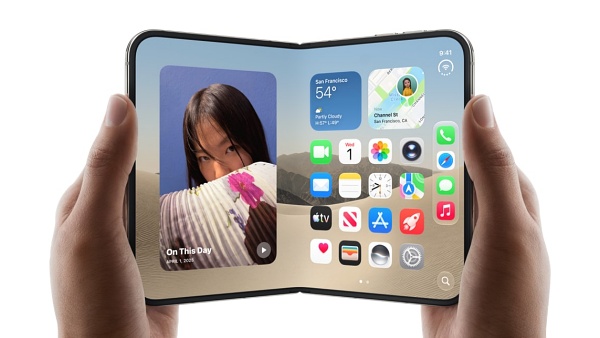
The iPhone Duo was classified as the most experimental model in Apple’s lineup. The key is a 5.4-inch external display and a 7.6-inch foldable internal display. Support for a stylus and multitasking also sets it apart from the other two models. On the other hand, it has the highest price, a smaller external screen, and increased thickness and weight. Creasing on the inner display, selfie camera performance and battery life were also cited as weaknesses.
The biggest constraint is the biometric authentication method. The iPhone Duo maintains a Touch ID-centred structure instead of facial recognition. Apple applied a face-recognition-like system to the foldable phone, but users still have to use Touch ID in dark environments or when approving payments or adding passwords. TechRadar said this feels like a step backward, but assessed that if users can adapt to how a foldable is used, there are few substitutes for the internal screen experience.
The differences among the three models ultimately depend on which features users can give up. The iPhone 18 Pro is the most stable in camera, battery and overall completeness. The iPhone Air pares back some specifications and instead emphasises a thin and light experience. The iPhone Duo has many compromises, but offers usability that is completely different from other iPhones through dual screens, multitasking and stylus support.
Against this backdrop, Apple’s top-tier iPhone strategy is also becoming more segmented. The comparison said the key point is that the lineup has been reshaped away from a structure where the most expensive model is superior in every category, and toward one where strengths and weaknesses diverge depending on form factor and usage.
 Jinju Hong
hongjj@d-today.co.kr
Keyword
#Apple #TechRadar #iPhone 18 Pro #iPhone Air #iPhone Duo
