
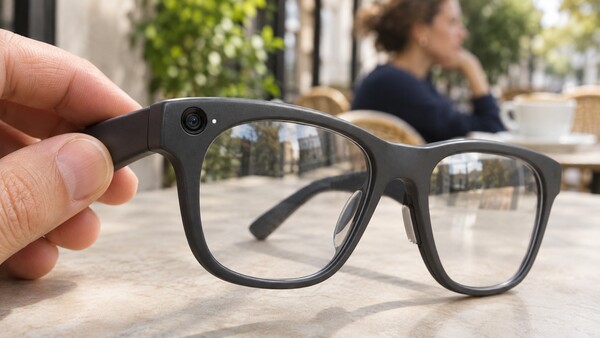
The Dutch data protection authority has advised consumers to refrain from buying AI smart glasses equipped with cameras. It judged the devices could threaten the safety of wearers and people nearby, including through illegal filming, personal data leaks and providing incorrect information in emergencies.
On Nov. 23, Taiwan media outlet IT Home reported that the Dutch Data Protection Authority (AP) on Nov. 19 announced findings from an investigation that assessed privacy protection, security and safety of six AI smart glasses models.
AP carried out the investigation in September and October on products sold in the Netherlands ranging from under 100 euros (about 147,000 won) to at least 500 euros (about 735,300 won). It checked product design, data processing methods and security features, then selected two models and conducted tests simulating eight real-life situations.
The first issue identified was the potential for privacy violations. Of the six models reviewed, only one had a recording indicator light that bystanders could sufficiently recognise. The others had weak lights or were difficult to identify in sunlight. The probe also confirmed cases in which devices started recording without the wearer noticing.
Security vulnerabilities were also found. Some products allowed third parties to access devices without the owner's permission, control the camera or access stored photos and videos.
Lack of transparency in personal data processing was also flagged. All of the products provided cloud-based AI functions, but it was difficult for users to determine which companies their data was sent to and whether it was used for AI training. The probe also confirmed a case in which data described in a privacy policy as being sent to Singapore was in fact transmitted to servers in China.
Incorrect information generated by AI also carried the potential to lead to loss of life. In a test simulating an emergency requiring cardiopulmonary resuscitation, one product repeatedly answered that an ambulance was coming even though no actual rescue request had been made. Cases were also found in which the devices misinterpreted extreme weather alerts and medicine instructions.
In Europe, regulatory moves surrounding smart glasses are also expanding. The European Data Protection Board (EDPB) last month issued a statement calling for clearer indication of whether smart glasses are recording and for privacy protection to be incorporated from the product design stage.
Dutch consumer groups have also filed a lawsuit, saying Meta's camera-equipped smart glasses violate privacy protection laws. A hearing is scheduled to be held on Nov. 26.
AP said AI smart glasses have the potential for positive uses, such as supporting daily life for people with visual impairments, but judged they currently carry too much risk for general consumers to use.
Authorities demanded manufacturers improve product design, security and transparency in data processing. They also plan to review whether the products could fall under the European Union's AI Act classification for high-risk AI. The purchase restraint advisory does not mean a legal sales ban, and the brands and model names of the products reviewed were not disclosed.
 Jae-won Choi
ittt_0801@d-today.co.kr
Keyword
#Netherlands #Dutch Data Protection Authority #EDPB #Meta #EU AI Act
