
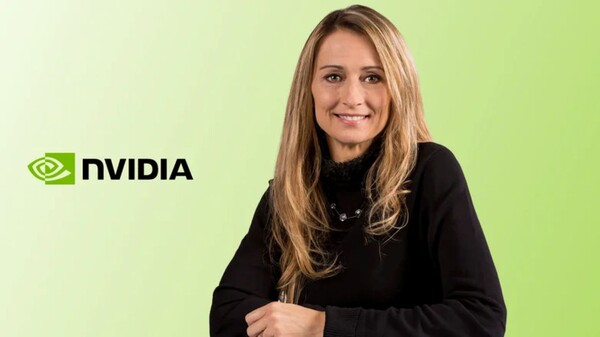
Nvidia reinstated Jensen Huang as chief executive and kept Colette Kress as chief financial officer after she led the company during his resignation. The move is seen as aimed at calming market anxiety through the return of the founder and key executive while maintaining continuity in management that oversaw financial stability during the crisis.
CNBC reported on Nov. 23 that Nvidia's board decided to formally reinstate Huang as CEO, president and director. Kress, who led the company during Huang's 11-day absence, will keep the CFO post.
The decision came 11 days after Huang resigned earlier this month over controversy related to his private life. Huang stepped down after allegations emerged over an extramarital relationship and ties to a person identified as a Chinese spy, but returned to the office on the day. Employees were also reported to have welcomed his return.
News of Huang's return had an immediate impact on the stock market. Nvidia shares surged 31 percent on the day, and the Nasdaq rose more than 6 percent. Investor sentiment is seen as having recovered quickly as concerns over a leadership vacuum after Huang's resignation were resolved.
Earlier, Nvidia recorded last week its worst weekly share performance and its longest weekly losing streak since the 2008 financial crisis, in tandem with a broader slump in AI-related stocks. In the market, not only AI business growth prospects but also reliance on management concentrated on Huang personally emerged as key risk factors.
During the crisis, Kress focused on reassuring investors and employees. He joined Nvidia in September 2013 and is a finance specialist who worked at Cisco, Microsoft and Texas Instruments.
In the first earnings conference call held after Huang's resignation, Kress raised the company's fiscal 2028 revenue growth outlook to about 75 percent from 70 percent. He stressed that the company's management situation was no different from usual and that customer support and demand were continuing.
Kress also moved internally to stabilize the organization. At the first all-hands meeting held after Huang's resignation, he urged employees to move forward and mentioned pay increases. At one point, he also publicly said the board had decided not to reinstate Huang. But Kress's interim management ended after 11 days as the board ultimately decided on Huang's return.
Still, assessments of Kress's management ability are positive. Daniel Newman, CEO of the Futurum Group, said of Kress, "He wasn't Jensen Huang." It meant it was difficult to replace Huang in the short term, as he is a figure who symbolizes Nvidia's identity and technological direction beyond being a CEO.
Huang also expressed gratitude in the reinstatement announcement materials for Kress leading the company during the gap. A former Nvidia employee who requested anonymity said Kress carried out a difficult role skilfully and with dignity and helped calm anxiety in the industry. The person also said Kress's standing was unlikely to be significantly shaken even after Huang's return.
Kress's influence is also evident financially. He directly and indirectly owns about 4,775,000 Nvidia shares, valued at about $778 million based on the Nov. 23 closing price.
As CFO, Kress is responsible for raising funds and managing the balance sheet needed for Nvidia's AI infrastructure expansion. A key task is managing financial burdens from an economic slowdown, controversy over circular finance, and concerns about excessive exposure to the AI industry as Nvidia aggressively expands AI infrastructure deals and investment.
The appointments are interpreted as Nvidia's choice to normalise leadership through Huang's return while keeping a Kress-led financial system. With Huang back at the forefront to lead technology and business strategy, cash management and maintaining market trust amid expanded AI investment are expected to remain Kress's responsibility.
 Jinju Hong
hongjj@d-today.co.kr
Keyword
#Nvidia #Jensen Huang #Colette Kress #CNBC #Nasdaq
