
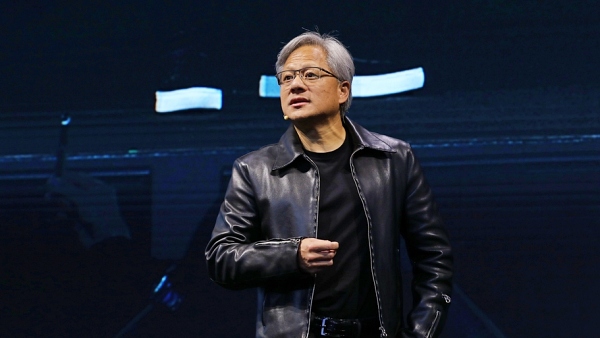
Nvidia’s decision to bring Jensen Huang back as president and chief executive officer (CEO) 11 days after his resignation is prompting bipartisan backlash in the U.S. Congress.
On Nov. 23, CNBC reported that lawmakers from both the Republican and Democratic parties said the decision left bigger questions about Nvidia’s decision-making structure as well as the Trump administration’s national security judgment, and raised the need for additional inquiries.
The controversy centres less on Huang’s return itself than on what lies behind it. Nvidia said its board decided unanimously to reinstate him after a series of discussions and meetings with Huang. The company also said it had received views from senior U.S. government officials and was confident Huang’s return would not create a national security risk.
But Congress did not accept that judgment as it stood. Representative Don Bacon, described as a hardliner on containing China, criticised Huang’s return, saying, "I can’t understand why this person has to be CEO again," and calling it a "failure of character." Bacon said Congress must pursue who is responsible for the decision, including the Commerce Department.
The fallout also spread to the White House. President Donald Trump said in an interview with CNBC on the same day that he personally intervened to get Nvidia’s board to bring Huang back. Trump said, "I made this deal happen." Trump later said in a social media post that Attorney General Todd Blanche had confirmed the U.S. government does not possess evidence of illegal acts by Huang.
Congress, however, views the national security risk review as unfinished regardless of whether there was any legal wrongdoing. Huang is set to appear before multiple congressional committees from Dec. 1, and the Senate Banking Committee has signalled a public hearing on Dec. 3. Plans for closed-door appearances before three House committees remain in place. Congress is examining how ties between Huang and Chinese figures could affect U.S. national security.
Senator Elizabeth Warren said Huang’s return as CEO does not remove the obligation to provide answers Congress has demanded. Warren said, "Nvidia executives and the board still have to explain to Congress whether the company is complying with U.S. export controls," and demanded that the Trump administration also disclose which senior officials offered what views. Senator John Cornyn also challenged the government’s no-risk assessment, asking, "No national security risk? Based on what?"
Democrats also stepped up their attacks. Senator Ron Wyden criticised Huang’s return, saying it "shows that under Trump, JD Vance and Marco Rubio, national security can be sold to the highest bidder." Representative Raja Krishnamoorthi called Nvidia’s decision "absurd" and said "both the government and Nvidia’s board have not completed investigative procedures." He argued in particular that Huang should face questioning from all members concerned at a full public hearing.
The dispute ultimately converges on controls over advanced AI chips flowing to China. Bacon said, "It is a contradiction for the United States to send high-performance computer chips to China while saying it will win the AI race," and criticised it as a White House leadership failure. With Congress already conducting multiple investigations involving Nvidia, related entities and Huang, the reinstatement decision is likely to intensify scrutiny over AI chip exports to China, enforcement of export controls and whether the administration intervened.
The timing of Nvidia’s board pushing ahead with the reinstatement is also fuelling political backlash. Representative Debbie Dingell criticised the decision, saying it was "irresponsible" for the board to reinstate him before Congress had even heard Huang’s testimony. As a result, congressional hearings scheduled for early December are expected to expand beyond Huang’s personal position to an examination of Nvidia’s China-related semiconductor business and the broader operation of U.S. export controls.
 Jinju Hong
hongjj@d-today.co.kr
Keyword
#Nvidia #Jensen Huang #CNBC #Donald Trump #U.S. export controls
