
KPR, a full-service communications group, unveiled 2 new programs as part of an "AI transition" to incorporate AI across its work methods.
KPR introduced "InsightQ," an AI-synthetic consumer needs research program that can be used in the consumer research stage. It also introduced "InsightLens," a pre-issue check program aimed at the stage before content is posted.
KPR said it has applied AI to crisis management by using an AI monitoring system for early crisis detection and providing AI analysis reports. It explained that the new programs expand the scope of AI use to consumer research and content checks.
According to the company, both programs are designed so AI analyzes and checks first, and people make the final judgment.
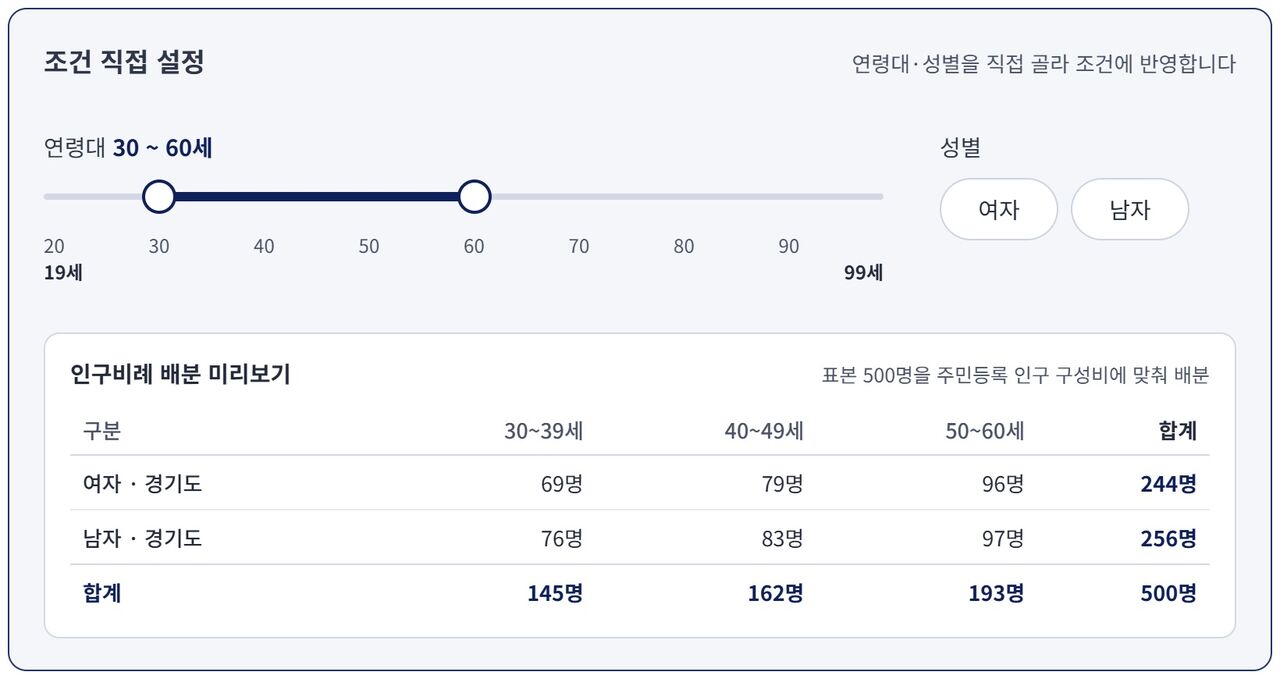
"InsightQ" uses an AI panel reflecting diverse demographic characteristics to explore consumer responses in advance without surveys. If users enter criteria in natural language, such as "women in their 20s and 30s, unmarried, Seoul," a matching panel is formed. Measured values from KOSIS national statistics, including population, income, prices, employment and quality of life, are reflected in the basis for responses. Samples can be selected from random, equal split, or proportional to the actual population methods, and users can review responses from virtual individuals matching the criteria.
It provides 8 basic question templates, including new product reactions, support or opposition to policies, comparisons of promotional phrases and price sensitivity. It allows repeated research by changing only the target for the same question, enabling comparisons of differences by target.
The company explained that because it does not collect personal information and the content is not exposed to external respondents, it can preview reactions to sensitive topics where response avoidance or social desirability bias may be a concern. It added that this also applies to policies before announcement or product concepts before launch.
"InsightLens" checks images before posting against "6 major controversy types" such as politics and history, discrimination, gender, copyright issues, channel manager mistakes and others, as well as standards based on 4 groups and "12 mandatory precautions." If users upload an image and run it, they can immediately see check results by item, reasons suspected of violations and directions for revision. It also checks date and day-of-week errors, typos and whether a logo has been altered. Cases the AI misses or misidentifies are recorded in an "false positive and false negative log" to continuously improve the checking standards, and check results can be shared in a report.
Kang-jin Kim (김강진), CEO of KPR, said AI is a tool that helps experts focus on strategy and judgment by reducing repetitive and time-consuming steps such as research and checks, rather than replacing human judgment. He said the company will embed decades of communications know-how into AI and expand AI use across the full communications process, from research and analysis to content checks and crisis management.
 Chi-gyu Hwang (황치규)
delight@d-today.co.kr
Keyword
#KPR #InsightQ #InsightLens #KOSIS
