
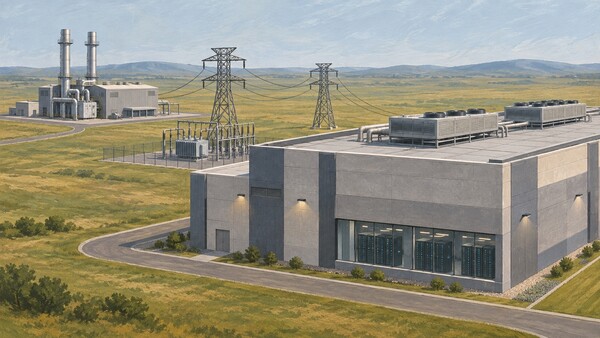
Electricity consumed over a year by hundreds of hyperscale data centres in the United States was estimated to exceed the annual power consumption of 148 countries each. As data centres surge with the spread of AI, the impact of massive power demand and reliance on fossil fuels on climate change is drawing attention.
On Nov. 16, local time, IT media outlet The Verge reported that a Harvard University research team published findings in the international journal Nature Sustainability after analysing electricity use and carbon emissions at 403 data centres.
The team identified hyperscale data centres across the United States using satellite imagery. It estimated electricity consumption from May 2024 to April 2025 based on each facility's power capacity.
The analysis estimated annual electricity consumption at about 82 terawatt hours, or 1.8 percent of total U.S. electricity consumption. That is more than the annual electricity use of many countries including Austria and Israel.
The estimated range, depending on utilisation rates, was 68 to 99 terawatt hours. The researchers also calculated carbon emissions from regional power generation using U.S. Environmental Protection Agency power plant data. As a result, carbon dioxide emissions from data centre electricity use were estimated at about 25.7 million tonnes. That is similar in scale to Denmark's annual emissions.
The analysis found that about 54 percent of the electricity supplied to the data centres was generated from fossil fuels. Natural gas accounted for 38 percent and coal for 15 percent.
Regional differences were also clear. Electricity in Wyoming, which relies heavily on coal, produced about 7 times more carbon emissions per kilowatt hour than Oregon, where hydropower accounts for a large share.
Gianluca Guidi (잔루카 귀디), a Harvard researcher who led the study, explained: "Even for the same computing facility, the environmental impact varies greatly depending on the energy mix of the region supplying electricity."
He added that because the analysis was based on data through April 2025, it could not reflect additional electricity demand from data centre expansion after that point.
It also could not distinguish electricity used for typical cloud tasks from that used for AI computing, and it did not sufficiently reflect environmental impacts related to on-site gas turbine generation.
Experts stressed the need to expand disclosure of electricity use information by data centre operators and increase new clean energy supply. As the AI industry grows, data centre locations and power procurement methods are emerging as key environmental policy issues.
 Choi Jae-won
ittt_0801@d-today.co.kr