
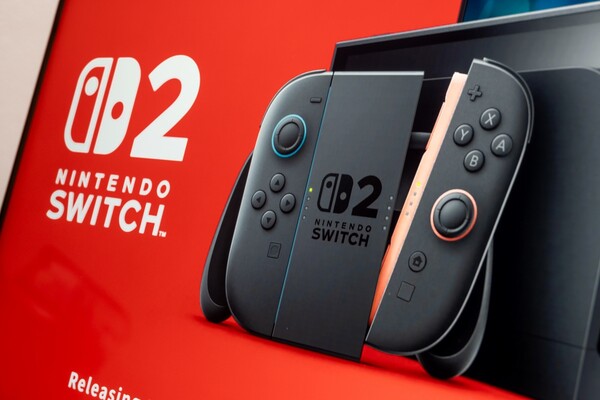
[DigitalToday reporter Jinju Hong (홍진주)] To extend Nintendo Switch battery life, users should avoid habits such as draining the battery to 0 percent or always charging it to 100 percent. As handheld game consoles become more powerful, managing battery degradation has emerged as a key factor that determines how long a device can be used.
On Nov. 16 local time, IT outlet Engadget reported that handheld game consoles are not structurally easy to replace batteries in. The Nintendo Switch is no exception. Lithium-ion batteries inevitably lose performance over time, and can end up close to a state where the device can be used only when connected to a dock. Still, charging methods can slow the pace of degradation.
The first thing to avoid is complete discharge. Using the battery down to 0 percent can consume charging cycles more quickly. Nintendo advises that even if the device is not used for a long period, it should be charged once every six months. It warned that otherwise the battery may become permanently unable to charge.
Keeping it charged at 100 percent at all times is also not recommended. With lithium-ion batteries, it is more advantageous to manage them between full charge and full discharge. Generally, 20 to 80 percent is cited as an appropriate range. Switch 2 also includes a feature that reflects that trend. Nintendo added a "Stop charging at about 90 percent" option in system settings. Unless the device is expected to be used for a long time while on the move, keeping this feature on can help manage the battery.
Temperature is also an important variable. Nintendo's official operating range is 5 to 35 degrees Celsius. Charging in high-temperature environments, in particular, can hasten the loss of battery capacity. It is desirable to avoid leaving the device under direct sunlight for long periods or charging it outdoors in severe summer heat. Extremely low temperatures can also affect performance, but it viewed them as not leading to permanent damage.
Battery replacement requires more caution. The Switch does not have a design where the battery can be removed directly from the outside, and it is built in internally, with surrounding electronic components also sensitive. Nintendo strongly recommends that users contact its customer service department rather than doing the work themselves. It also does not provide an official self-repair guide for any model of the Switch 1.
For Switch 2, conditional self-replacement is possible. Nintendo said only units marked BEE-001(-01) support a user-replaceable battery. Even in that case, a dedicated BEE-003(-01) battery replacement kit is required. The process requires an "electrically grounded surface" and careful handling. That is because a large electrostatic shock can damage circuits.
Ultimately, the emphasis is that everyday charging habits are more important than complex repairs for managing Switch batteries. By avoiding complete discharge, keeping the battery at 100 percent for long periods and charging in high heat, and by periodically charging devices that are left unused for extended periods, the chances of lasting without a battery replacement until moving on to the next device increase. As a result, the Switch 2's 90 percent charging limit is drawing attention not just as a convenience feature but also as a way to manage device lifespan.
 Jinju Hong
hongjj@d-today.co.kr
Keyword
#Nintendo #Nintendo Switch #Switch 2 #Engadget #Lithium-ion battery
