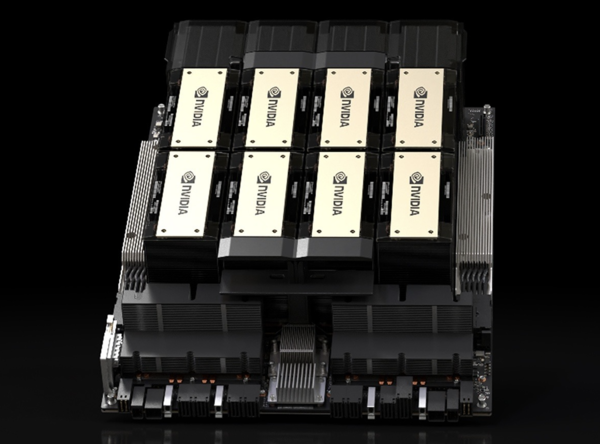
Major foreign media outlets including IT publication TechCrunch reported on Nov. 17 that Nvidia has decided it will no longer sell H200 chips to China.
Colette Kress (콜레트 크레스), Nvidia’s acting chief executive officer, said on an earnings call that day that the company would halt sales of H200 to China.
The decision effectively pulls Nvidia out of a disputed exception route to the United States’ curbs on advanced semiconductor exports to China. Sales of the H200 to China had been carried out in a way coordinated by former CEO Jensen Huang and President Donald Trump. It was a deal structured so chips were shipped via the United States, allowing the U.S. government to collect a 25 percent tariff.
China’s access to advanced artificial intelligence accelerators emerged as a key issue in the first earnings call held since Huang stepped down. Nvidia also created a committee under its board on the same day to oversee national security policy, compliance with export controls and global trade risks. That signals China business and export regulations have become key variables across management.
The existing deal drew backlash from U.S. hardliners on China. They saw that providing computing resources to Chinese research institutions would make it difficult to maintain U.S. AI leadership. Huang, by contrast, had maintained that giving up the China market would be disadvantageous to the U.S. technology industry. In an interview in April, he said ceding the China market by the U.S. technology industry would be "harmful to our country."
Nvidia’s China strategy has recently been shaken sharply. The United States issued a new rule on Nov. 16 that would prevent the supply of U.S.-made advanced chips to overseas data centres that remotely provide services to Chinese customers. That would also constrain indirect supply routes via data centres outside China.
Markets are watching closely for the impact on results. Jefferies forecast that the regulation could cut Nvidia’s data centre revenue next year by $44 billion to $62 billion. Kress, however, cited new export controls and said heavy pent-up demand for advanced chips such as Vera Rubin would mean no impact on the company’s overall revenue.
In the medium to long term, Southeast Asian markets also emerged as a variable. If the new regulation is applied, the risk of losing potential customers in places such as Singapore, Malaysia, Thailand and Indonesia has been raised. Criticism has also persisted that Nvidia is highly dependent on China-linked demand. Critics have claimed up to 20 percent of Nvidia revenue comes from China-related demand. Nvidia’s Singapore unit posted annual revenue of $104 billion in 2025, but Nvidia has not disclosed the figure since then.
China’s reaction was also nuanced even before Nvidia cut off H200 supply. An analysis said the Chinese government wants more to expand demand for its domestic semiconductor industry, even if major AI buyers still prefer Nvidia equipment. Jacob Feldgoise (제이컵 펠드고이즈), a researcher at Georgetown University’s Center for Security and Emerging Technology, viewed that China did not generally accept H200 deliveries based on that trend.
Even so, signs have been confirmed that leading AI labs in China have secured Nvidia chips through other routes. Major AI models in China were reported to show traces that they were all trained on Nvidia Grace Blackwell chips, which are banned from export to China. Training itself may have taken place at data centres outside China, but the new rule also blocks sales to such facilities.
Going forward, data centres for large-scale AI training that want to buy Nvidia chips must certify they do not provide services to Chinese customers. Dan Fisher-Owens (댄 피셔-오언스), an export-controls specialist lawyer, noted that data centres that cannot make such certification could be pushed to other chip options. That has raised the possibility that Nvidia’s contraction in China business could go beyond a simple halt in regional sales and also affect the composition of global data centre customers and market share.
 Jinju Hong
hongjj@d-today.co.kr
Keyword
#Nvidia #H200 #China #TechCrunch #Jefferies