
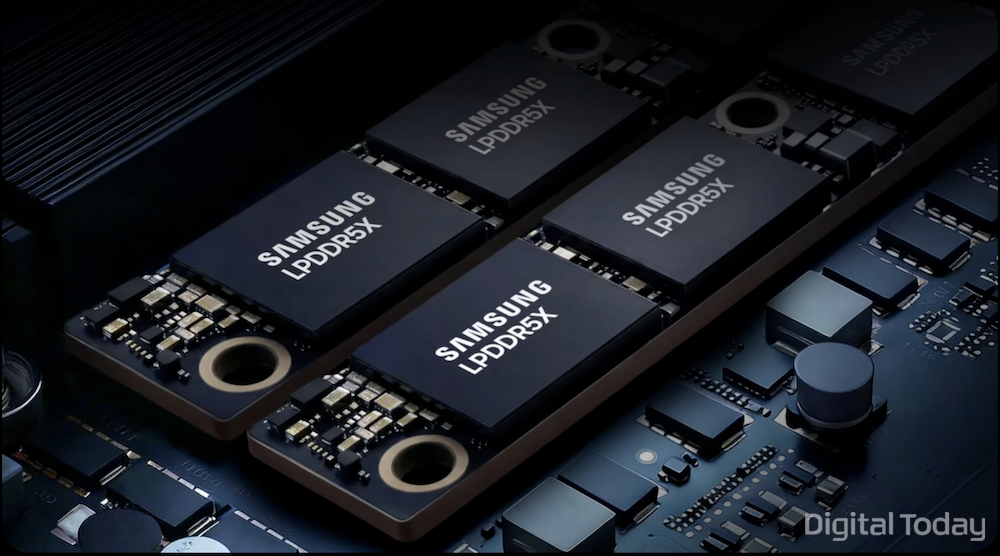
As devices using low-power DRAM expand beyond smartphones to PCs and servers, competition among related companies to secure supply is intensifying.
Hana Securities expects server LPDDR to account for 22 percent of total LPDDR volume this year. It said LPDDR's biggest buyer will shift from the smartphone industry, including Apple and Samsung Electronics, to Nvidia as shipments of Nvidia AI server CPUs increase. LPDDR5X used in Nvidia's next-generation CPU Vera is 147 times the average DRAM capacity used in smartphones. Until now, smartphones have been the largest source of demand for low-power DRAM such as LPDDR5X.
In servers, CPUs are driving up demand for low-power DRAM. Nvidia's next-generation AI server Vera Rubin is designed to expand the role of the CPU as well as the GPU to reduce compute bottlenecks. Hana Securities said the Vera CPU can include up to 1.5 terabytes of LPDDR5X, about three times the previous-generation Grace.
AMD in April made official that it will support LPDDR5X-based SOCAMM in its next-generation server CPU to be released next year. Reports have also emerged that Vera's SOCAMM capacity has been reduced, but Daishin Securities said it was an adjustment due to a memory supply shortage and that overall demand had not changed.
There is also an example of low-power DRAM being used in GPUs. Intel on the 17th said it can broaden the use of its data-center GPU, the Intel GPU D270, codenamed Crescent Island, from AI inference to high-performance computing (HPC). Based on Intel's branded card, the product carries 160 gigabytes of LPDDR5X. In configurations designed by partners, memory capacity can be increased to as much as 480 gigabytes.
With AI PCs added, the range of uses for low-power DRAM widens further. Nvidia in June unveiled the N1X processor for AI PCs at GTC Taiwan. Demand for low-power DRAM is spreading beyond data centers to the edge stage of individual devices. More products are set to handle AI workloads directly on laptops rather than leaving them to servers.
Memory modules tailored for AI PCs have also emerged. Laptop memory has so far relied on plugging in DDR-based SODIMM or soldering low-power DRAM onto a board. SODIMM is easy to replace but has lower power efficiency than low-power DRAM modules, while the soldering approach does not allow capacity upgrades or replacement.
The LPCAMM2 memory module is detachable while incorporating LPDDR5X. Samsung Electronics said its LPCAMM2 was the industry's first to meet standards set by the Joint Electron Device Engineering Council (JEDEC) and reduced the mounting area by 60 percent compared with a configuration using two SODIMMs.
Memory makers entered competition in LPCAMM2 early. Samsung Electronics, SK Hynix and Micron in 2024 unveiled LPCAMM-series products in succession and announced plans to mass-produce them that year. SK Hynix said in its earnings release at the time that it was preparing LPCAMM2 in anticipation of the on-device AI market. Micron said it would mass-produce products with 16 to 64 gigabytes of capacity.
Prices are rising as usage expands. Mirae Asset Securities expects contract prices for LPDDR5X (16GB) in the second quarter to rise 81 percent from the previous quarter, citing a structural shift as the share for AI uses such as SOCAMM increases. A Kyobo Securities report citing TrendForce forecasts put the expected rise in fixed prices for server DRAM over the same period at 50 to 55 percent, lower than mobile low-power DRAM.
PC and server companies have moved to secure supply. Kyobo Securities said downstream companies overall, including cloud companies and PC manufacturers, are signing long-term supply contracts with memory makers. With smartphones, PCs and servers seeking the same low-power DRAM, supply is expected to keep flowing to companies that can bear prices and sign contracts first.
 Dae-geon Seok
d2dg@d-today.co.kr