
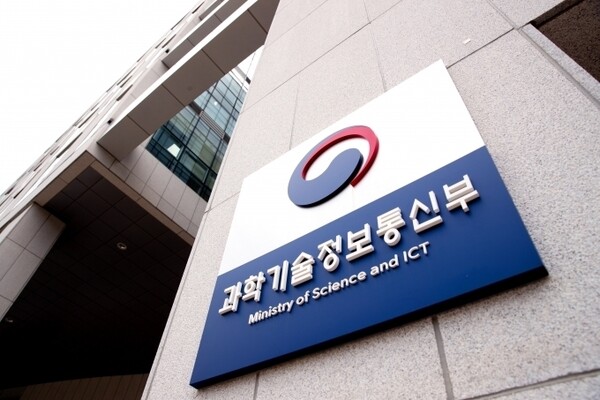
South Korea's Ministry of Science and ICT held the "2026 Broadcasting and Telecommunications Complex Disaster Safety Korea Exercise" on Oct. 30 with four telecom operators and related agencies.
The drill took place at KT's Guro switching center and the government complexes in Seoul and Sejong. Participants included KT, SK Telecom, SK Broadband and LG Uplus, as well as the Korea Communications Commission and the Ministry of the Interior and Safety, along with police, fire, military and local governments.
The exercise assumed a complex disaster in which a drone attack caused a fire and a power outage at telecom facilities, paralyzing networks, and additional attacks spread disruptions to services at multiple telecom operators.
In on-site training, police, fire services, the military and local governments worked together to review initial response procedures such as rescuing people, extinguishing fires and protecting telecom facilities. The drill then continued with training to prevent the spread of damage and quickly restore telecom services through cooperation among telecom operators. It also demonstrated installing mobile base stations and using 5G mobile networks to temporarily restore internet and IPTV services in the event existing networks are damaged.
The drill also checked user protection measures in the event of disruptions. It opened "disaster roaming" that uses another operator's wireless network and "disaster WiFi" that users can access regardless of operator, and confirmed actual call and internet connectivity. It also demonstrated payment support using smartphone tethering, assuming small merchants' card payments were halted due to a wired internet outage.
In a discussion-based drill, Vice Prime Minister Kyung-hoon Bae (배경훈), who is also minister of science and ICT, led the exercise as head of the Central Accident Response Headquarters. Related agencies shared real-time updates on on-site damage and recovery and discussed measures including securing essential communications for emergency rescue and medical services, supporting recovery personnel and equipment, providing alternative communications and informing the public.
Bae said, "Telecommunications infrastructure is key infrastructure that supports the daily lives and economic activity of the public and the basic AI society." He said, "We will reflect improvements identified in this training in the actual disaster response system and strengthen cooperation between related agencies and telecom operators."
 Jin-ho Lee
jhlee26@d-today.co.kr