
South Korea's financial authorities will expand Miso Finance support using 800 billion won in contributions from banks and companies. They plan to raise annual supply from about 300 billion won to 600 billion won by 2028. They also plan to expand specialised products for financially vulnerable groups such as young delivery platform workers and returning farmers.
The Financial Services Commission on Thursday held a "Miso Finance funding donation agreement ceremony" at the Korea Inclusive Finance Agency and said it would seek funding contributions totalling 800 billion won from seven financial institutions and companies.
Participants in the agreement included Samsung Life Insurance, NH NongHyup Financial Group, Shinhan Bank, Woori Bank, KB Kookmin Bank, Hana Bank and IBK Industrial Bank of Korea.
Samsung will contribute 200 billion won, while NH NongHyup Financial Group, Shinhan Financial Group, Woori Bank, KB Kookmin Bank, Hana Bank and IBK Industrial Bank of Korea will each contribute 100 billion won. The participating institutions plan to distribute the funds and contribute them to each Miso Finance foundation over up to 5 years. Shinhan Financial signed a separate agreement in March.
Shinhan Financial Group has already contributed 40 billion won in June, which is being used to support Miso Finance.
Within this year, NH NongHyup Financial Group plans to pay 53.4 billion won, while Samsung and KB Kookmin Bank will each pay 40 billion won. Hana Bank and IBK Industrial Bank of Korea will each pay 20 billion won. Woori Bank will start contributions from 2027.
NH NongHyup Miso Finance foundation to be established to support financially vulnerable rural groups
NH NongHyup Financial Group also signed a separate agreement on Thursday to participate in the Miso Finance programme.
NongHyup Financial plans to set up a tentatively named "NH Miso Finance Foundation" within this year and begin providing loans mainly to financially vulnerable groups in rural areas from the first quarter of 2027.
The foundation will use 100 billion won prepared by five NongHyup Financial affiliates and will open 8 branches nationwide in stages.
NongHyup Financial is also reviewing specialised products such as "NH Farming Start-up Funds" and "NH Farming Operating Funds" to support low-credit returning farmers and young farmers with agricultural start-ups and settlement.
The products are expected to be designed to support funds needed for farm operations, including lease deposits for farmland and facilities, purchases of agricultural materials and machinery, and costs for seeds, fertiliser and labour.
With NongHyup Financial's participation, the number of Miso Finance programme operators will rise to 39 this year. It also plans to gradually expand the number of Miso Finance branches, which stood at 168 as of September, to around 180 during 2027.
Miso Finance supply to expand to 600 billion won, specialised products to be introduced
The FSC is pursuing institutional improvements based on the view that Miso Finance, introduced in 2009, has not fully realised its original purpose due to rigid operations focused on soundness.
Based on the improvement measures announced in March, it plans to increase Miso Finance supply to 400 billion won this year. It will then expand it step by step to 500 billion won in 2027 and 600 billion won in 2028.
Each Miso Finance foundation is preparing products that reflect its own capabilities and regional characteristics in addition to existing standardised products.
The Shinhan Miso Finance Foundation has been paying asset-building support grants since the second quarter of this year to young loan borrowers who repay faithfully. It has so far supported a total of 444 people with 80 million won.
Eligible recipients are customers who have received either a "Youth Operating Funds Loan" or a "Youth Future Link Funds Loan" since April 1 and are repaying principal and interest without delinquency. It pays up to 300,000 won per quarter for a total of 10 times, up to 3 million won per person.
The KB Miso Finance Foundation plans to launch in November a tentatively named "KB Youth Rider Hope Loan" for low-credit, low-income young delivery platform workers.
The programme targets delivery platform workers aged 19 to 39. It supports up to 5 million won within the purchase price of a delivery motorcycle. The loan interest rate is around 2.5 to 4.5 percent a year.
It plans to apply an interest rate discount of 1.5 percentage points to buyers of environmentally friendly two-wheelers such as electric motorcycles and bicycles. It also plans a 0.5 percentage point discount for customers who complete financial education programmes at the Financial Supervisory Service or the Korea Inclusive Finance Agency.
The FSC expects counselling and screening work to increase as Miso Finance supply expands. It will also pursue expansion of delivery channels and greater work efficiency.
The Korea Inclusive Finance Agency plans to support improvements in counselling and contract procedures and expanded job training. It also plans to support IT links and system construction for developing specialised products.
The FSC will also establish a consultative body involving the government, the Korea Inclusive Finance Agency and Miso Finance foundations. The body, chaired by the FSC vice chairman, plans to regularly review Miso Finance issues and share best practices and operating experience by foundation.
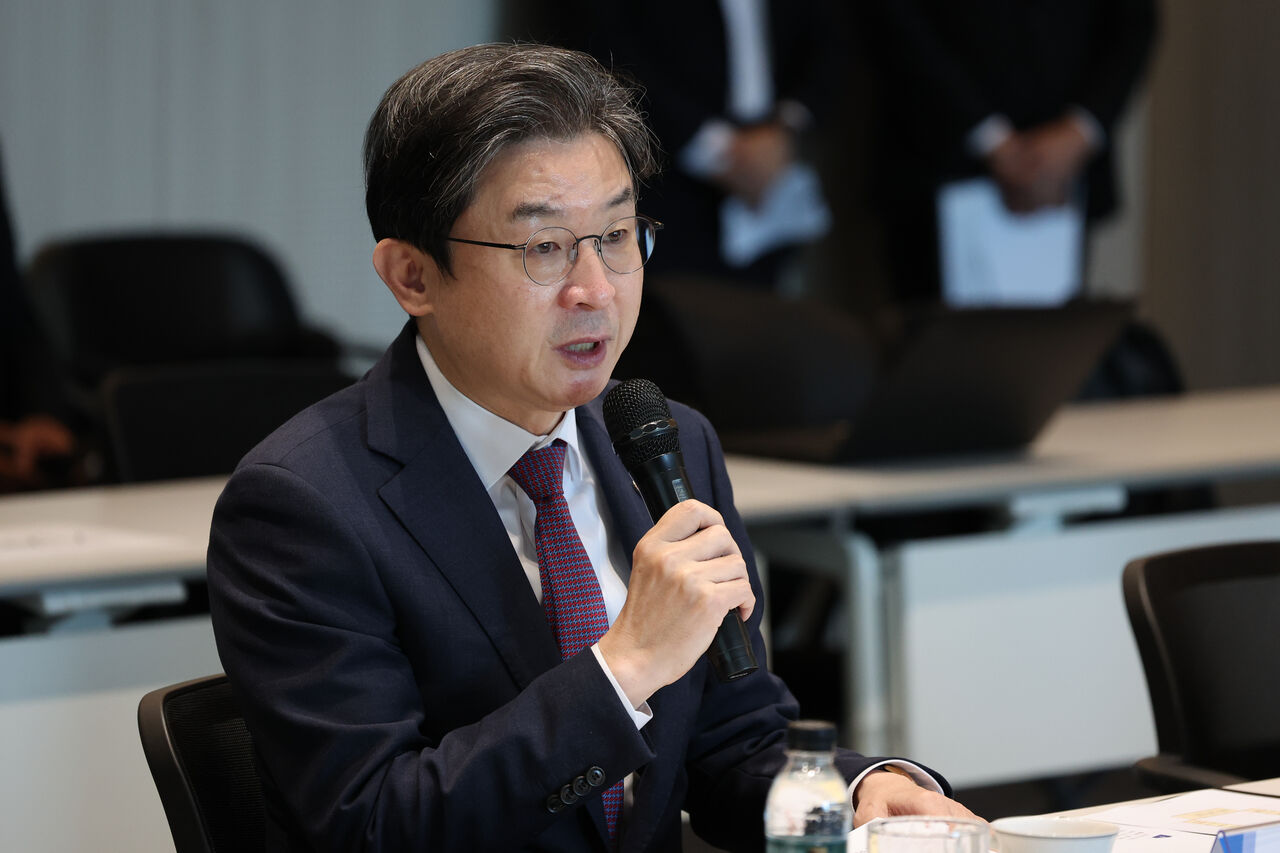
FSC Chairman Lee Eok-won (이억원) said, "Miso Finance is Korea's alternative financial model backed by social capital of trust and relationships." He added, "To further strengthen Miso Finance's identity as grassroots finance, a more meticulous delivery system and the role of the field are most important, in addition to funding."
 Lee Ji-young
ljy@d-today.co.kr