
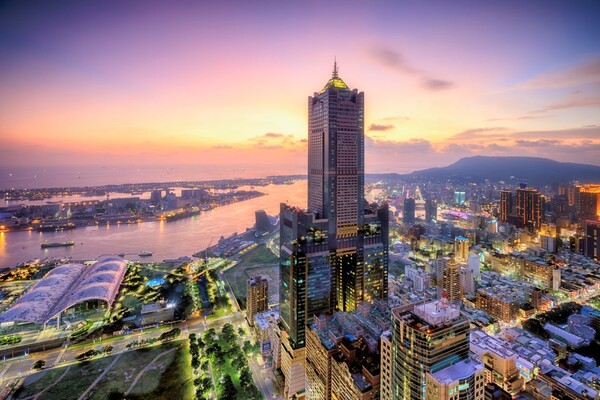
Kaohsiung city in Taiwan has disclosed early results from an urban AI governance system that detects flooding, traffic congestion, road damage and environmental anomalies and delivers the information to relevant departments.
A Taiwanese media outlet, iThome, reported on Oct. 29 local time that Kaohsiung is pushing the “Kaohsiung AI Lighthouse” project with Nvidia, Chunghwa Telecom, Hon Hai, Linker Vision and Zuotuo Hongyu, building a city-level AI operating system.
The core is to integrate cameras, sensors and administrative data across the city so AI can spot anomalies first and link them to administrative responses. Previously, responses began only after citizen reports or on-site checks. Kaohsiung is shifting to a system in which responsible departments act immediately once AI detects a problem.
The Kaohsiung mayor said data and systems built by different departments were fragmented, increasing data silos and cost burdens. The mayor said the city will integrate data through sovereign AI and let AI serve as the brain of urban governance. The plan aims to move away from passive administration that waits for citizen reports and create a system in which the city detects anomalies on its own.
Kaohsiung introduced a vision-language model, laying the groundwork for analyzing situations in video and understanding them as text. To identify vehicle flows and public safety anomalies, it linked fixed cameras, mobile equipment on buses, government vehicles and sanitation vehicles, air pollution and flooding sensors, and rainfall observation stations. The process used 6.45 million hours of video data, 2,000 TB of training data and 108 training scenarios.
It also added Nvidia’s Cosmos Reason 2 to infer the causes behind abnormal situations. If the existing model determined what was happening, Cosmos Reason 2 analyzes why it happened by combining multiple images and incident information. For example, when traffic flow drops sharply, it infers whether the cause is flooding, an accident or roadworks, not only whether there is congestion. Kaohsiung is also testing Cosmos Reason 3, a follow-on model.
The AI analysis results are delivered to relevant departments through the Smart Governance Platform, or SGC. Road damage goes to a public works department, flooding to a water resources department, traffic anomalies to a traffic management department, and environmental pollution to an environmental department.
For road inspections, it uses 45 mobile devices and 135 cameras. Kaohsiung’s Public Works Bureau said that after linking AI with administrative systems, in the fastest case it took about 2 minutes from detection to notifying the responsible department and assigning the job. In a September pothole case, AI spotted the problem at 2:36 p.m. and notification was completed at 2:38 p.m., with repairs finished about an hour later. It is not replacing technical staff, and final confirmation is handled by management personnel.
In water resources and disaster prevention, it links 400 floodgate observation stations with footage from more than 13,000 cameras. Kaohsiung’s Water Resources Bureau said AI proactively detected 52 percent of all incidents during heavy rain on Aug. 22. In traffic, it links seven expert systems and 128 APIs to identify abnormal congestion and its causes. The Transportation Bureau said AI issued road network anomaly alerts 14 minutes faster than existing manual records.
In the environmental field, it identifies black smoke, open burning, illegal dumping and road litter. When it finds anomalies in video from buses in motion, it delivers the footage and location information to the relevant department within 30 seconds. Kaohsiung’s Environmental Protection Bureau said that during a fire in the Gangshan area, AI detected black smoke first and alerted officials via SGC and Line, about 3 minutes faster than reports to the fire authorities.
Kaohsiung plans to shift city operations from post-incident responses to a proactive system by assessing city conditions through video, inferring causes with AI and linking the results to administrative systems. Mayor Chen Chi-mai (천치마이) said other Taiwanese cities can adopt the model validated by Kaohsiung without building separate systems.
 Seung-a Yoo
ysah@d-today.co.kr