
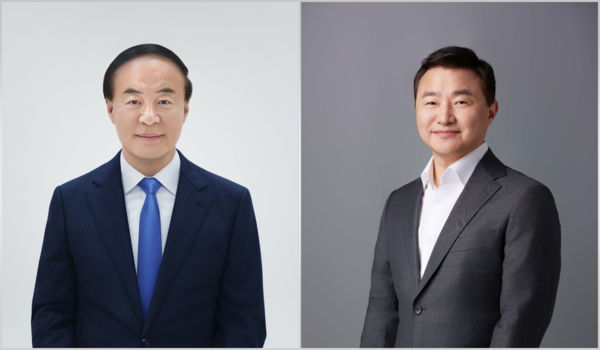
The two CEOs leading Samsung Electronics' semiconductor (DS) and device (DX) divisions jointly called for strengthening fundamental competitiveness in anniversary messages marking the company's 57th founding anniversary. Demand for AI semiconductors is improving results at DS, while raising the burden of higher semiconductor prices at DX. That prompted a self-assessment that both divisions need business systems that do not rely on market conditions. Samsung Electronics urged employees to rebuild basics such as technology and quality and prepare for the market after the boom.
Samsung Electronics released separate anniversary messages for the DS and DX divisions on Oct. 30 to mark its 57th anniversary. No separate ceremony was held. Vice Chairman and CEO Jeon Young-hyun (전영현), who leads DS, expressed gratitude to employees for achieving the biggest results in the company's history. He also said, "Now is the time to soberly look back at our reality and competitiveness and prepare for the future, rather than celebrating results driven by the market conditions of AI growth."
Jeon said new growth opportunities are opening in the semiconductor industry centered on artificial intelligence, but uncertainty in the global economy and industrial environment remains high. He said no one can guarantee how long the market boom will last and external challenges are intensifying. He stressed the need to build a system that can respond quickly and flexibly in any situation.
Samsung Electronics posted consolidated operating profit of 107.4 trillion won in the third quarter, opening an era of 100 trillion won in profit as the first global tech company to do so. The result was up 783 percent from a year earlier. Third-quarter revenue was 195.3 trillion won, up 127 percent from a year earlier.
The same AI demand was described as creating different management conditions for the DX division. President and CEO Roh Tae-moon (노태문), who leads DX, said competition is intensifying among leading companies over AI services and device innovation, and price increases driven by a surge in AI-related semiconductor demand are continuing.
Roh said AI-based work methods and process innovation are also spreading rapidly. He said, "In this era of transformation, only companies that prepare and respond one step ahead can grow." He added, "The DX division is facing difficult management conditions, but the sweat and effort we have shed together will become a firm foundation for greater growth."
The prescription offered by the two leaders was to return to basics of technology and quality. Jeon urged strengthening fundamental competitiveness by returning to technology and quality to build a business system that does not sway with market conditions. He said, "Results have recently improved, but it is difficult to say our technological competitiveness has fully recovered. We still have a long way to go."
Jeon said the company must not forget the basics of the semiconductor industry, including securing next-generation technological competitiveness, advancing manufacturing efficiency, ensuring perfect quality and improving yield. He said the "super-gap" must be proven through technological competitiveness and quality recognized by customers. He set five values for how DS should work: customer, technology, collaboration, execution and ethics.
Jeon urged gratitude and humility toward customers and stressed that customer relationships must be protected, especially during a boom. It was a reference to changes being sensed as the profit base of Samsung Electronics' memory business shifts from previous cycles toward long-term supply agreements (LTA).
Jeon said, "The growth and new opportunities in today's AI semiconductor market were created by customers," adding, "The more of a boom it is, the more humble we should be." He added, "There must never be any unreasonable demands on customers or an assertion of a superior position because of a boom." He said, "A boom is temporary and the market can change at any time, but customer trust is the foundation of sustainable competitiveness that must be protected in any environment."
Roh also stressed the need to strengthen market leadership by raising fundamental competitiveness in the device business, including product completeness, quality and operations. He said the company should reinforce basics such as product completeness, quality and reliability to provide customers with the best AI experience and further solidify market leadership. He said it must strengthen capabilities in proactive supply chain sensing and management to secure differentiated cost competitiveness. The remarks were interpreted as a call to manage costs from the component procurement stage as semiconductor price increases continue.
Roh presented challenges in new technologies and new products, along with strengthening fundamentals, as preparation for the future. He said the company should build on successful cases of new products such as intelligent eyewear, AI companion devices and home entertainment AI TVs. For new businesses at the division level, including robots, HVAC, medtech and automotive electronics, he said the company will create a foundation for growth through securing core technologies, building development and manufacturing infrastructure and making investments. Roh said, "Let us open the path to future growth and a leap for the DX division by securing fundamental competitiveness, preparing and challenging for the future one step ahead, and fundamentally improving our constitution through AX."
 Seok Dae-geon
d2dg@d-today.co.kr