
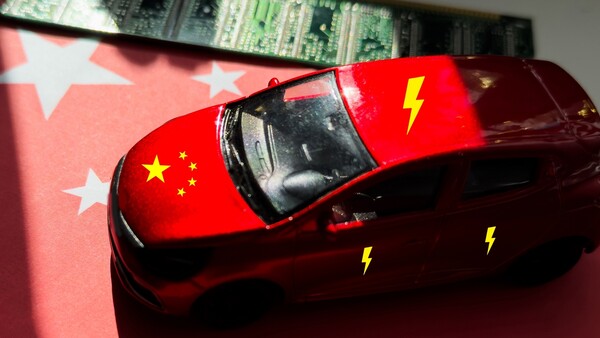
Some have warned that policies to protect Europe’s auto industry could instead undermine its competitiveness in electric vehicles. With China’s battery and EV industries growing rapidly, easing rules on internal combustion engines could slow Europe’s technology transition, the argument goes.
Cleantechnica reported on Oct. 29 that William Todts (윌리엄 토츠), executive director of T&E, criticised the direction of an auto industry overhaul agreed by France and Germany in an account of his visit to China.
France and Germany proposed keeping the 2035 new-car carbon dioxide emissions reduction target at 90 percent versus 2021 levels, while removing the requirement to offset the remaining 10 percent of emissions separately. The proposal also allows exceptions for vehicles that run only on synthetic fuels or biofuels, and includes steps to encourage the use of European-made parts.
Todts said he was concerned that such technology neutrality could weaken incentives to invest in electric vehicles. He said a plan being pursued from 2028 to favour European parts is insufficient for fostering Europe’s battery industry because it would require only a 10 percent share of batteries to be sourced within the region.
Todts also pointed to China as an alternative example. In China, new-energy vehicles — battery-electric and plug-in hybrids combined — accounted for 67 percent of passenger-car sales in September. The rollout of electric trucks and the operation of battery swap stations are also expanding.
In Ningde, a hub of China’s battery industry, large-scale production facilities are clustered. CATL, the world’s largest battery maker, is also expanding its production base to Germany, Hungary and Spain.
Todts said, "China pursued reducing air pollution, cutting dependence on oil and fostering industry as consistent policies." He described China’s electrification competitiveness as the result of long-term policy support.
China also faces challenges including price competition among companies, weaker profitability and high debt. France and Germany say regulatory flexibility is needed to protect existing jobs and manufacturing competitiveness. The measures remain at the discussion stage and are not yet final EU-wide rules.
Todts said, "The future competitiveness of Europe’s auto industry depends on securing battery, software and autonomous driving technologies rather than protecting internal combustion engines."
 Jae-won Choi
ittt_0801@d-today.co.kr