
U.S. automaker Ford has targeted Chinese EV maker BYD, claiming the efficiency of its new electric drivetrain is about 30 percent higher. It aims to secure competitiveness in the low-priced EV market by cutting both battery size and manufacturing costs.
InsideEVs reported on Oct. 29 that Ford Chief Executive Jim Farley (짐 팔리) claimed during the company’s third-quarter earnings presentation that the efficiency of the motor, reduction gear and inverter applied to the new Universal Electric Vehicle (UEV) platform is about 30 percent higher than BYD products.
Farley said, "With improved drivetrain efficiency, we can design a smaller battery while still achieving our target driving range." Batteries are among the largest contributors to EV costs, and reducing capacity helps lower vehicle prices.
The first vehicle to use UEV will be the Fathom midsize electric pickup due to be launched in 2027. The base model starts at $28,350, or about 37.96 million won.
Ford also cut the number of parts significantly during platform development and changed its production system. It will replace 146 existing body structural parts with two large one-piece aluminum castings and will introduce parallel assembly by dividing the vehicle into three sections.
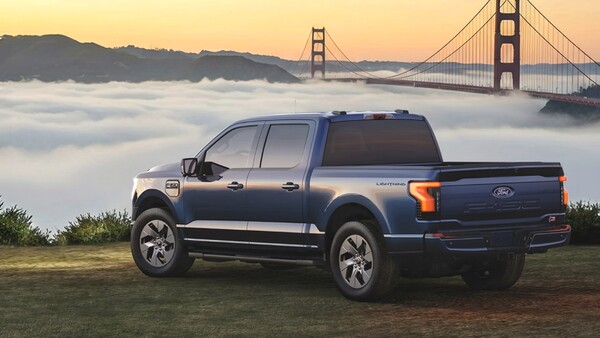
Lithium iron phosphate (LFP) batteries to be produced in the U.S. state of Michigan are also a key element in securing cost competitiveness. Ford aims to build EVs that are more economical than the Mustang Mach-E and the F-150 Lightning.
Ford did not disclose the BYD model used for comparison, the drivetrain configuration, or the conditions under which efficiency was measured. Battery capacity and official driving range for the Fathom have also not been confirmed, making it hard to conclude that the 30 percent figure will translate into a real-world efficiency advantage.
Ford is working with Geely Automobile in Europe and learning ways to cut costs and speed up product development. Ford Chief Operating Officer Kumar Galhotra (쿠마르 갈호트라) said, "We plan to expand the motor-efficiency improvement technology secured in UEV to hybrid vehicles as well."
 Jae-won Choi
ittt_0801@d-today.co.kr