
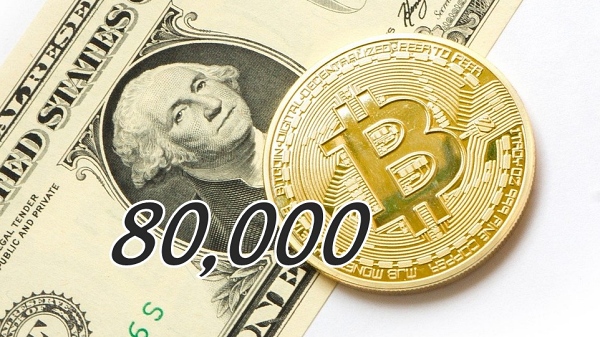
[DigitalToday reporter Hyeonwoo Chu] Over the past week, the key word in the global cryptocurrency industry was “endurance”. Bitcoin held $80,000 despite a CPI shock, and XRP defended $1.30 even as interest cooled. Next come a possible application date on Oct. 23 for an XRPL amendment, preliminary U.S. October PMI data, Ripple’s Swell event from Oct. 27 to 29 and the FOMC meeting from Oct. 27 to 28. For bitcoin to reclaim the 20-month line above $87,000, uncertainty over the rate path must ease and sell orders sitting above the market on exchanges must be absorbed. If expectations for a rate hold fade or a stock market correction deepens, a $75,000 scenario could be discussed again.
Stablecoins and tokenisation are accelerating their entry into regulated payment networks regardless of price. In South Korea, a proposal to defer taxation, a notice expected in November and the release of the government’s draft Digital Asset Basic Act will be practical variables for investors.
• Bitcoin defends $80,000 despite a rise in the U.S. inflation index... the key is an FOMC rate hold • “If the S&P 500 falls 20 percent, bitcoin plunges to $10,000”... Bloomberg • “Even if the AI bubble bursts, even if rates rise... bitcoin ultimately goes up”
The first factor to shake the market was inflation. The September CPI announced by the U.S. Bureau of Labor Statistics on Oct. 14 rose 3.7 percent from a year earlier, above the 3.6 percent estimate, and core CPI excluding food and energy was also higher than expected at 2.6 percent versus 2.5 percent. Bitcoin fell about 2 percent immediately after the release, slipping below $82,000. The September producer price index released on Oct. 15 was also strong, and in Japan bitcoin at one point slid to the 12.5 million yen range. Even so, bitcoin held $80,000 and traded at $82,341 on the morning of Oct. 19, with market share at about 60.24 percent. As Jim Cramer warned on CNBC, U.S. stocks fell amid uncertainty from overlapping inflation, interest rates and the Iran war, with the S&P 500 down 1.1 percent and the Nasdaq down 1.9 percent on Oct. 14. It was a week in which risk assets overall were weighed down.
• “You’ll regret selling now”... Jim Cramer’s warning of 10 days of rebound • In an era of high inflation, can bitcoin become an inflation hedge?
The key is the Federal Reserve. A Bitbank analyst cited by Coinpost said the federal funds rate futures market is pricing in about a 70 percent chance of a hold at the October FOMC meeting. A report on Oct. 15 citing CME FedWatch also said an analysis showed the probability of a rate increase at the Oct. 27-28 FOMC meeting rose to about 54 percent. The two figures are hard to compare directly because they differ in timing and source, but one point is clear: market expectations are not settled in one direction.
On whether high inflation is a positive for bitcoin, CryptoSlate answered with numbers. With the 3-month U.S. Treasury yield at 4.26 percent, investing $10,000 in cash creates an opportunity cost of $426 a year versus Treasuries. If an investor borrows $10,000 at 8 percent annual interest and buys $20,000 worth, interest alone is $800 a year, so including the Treasury opportunity cost the break-even requires a rise of about 6.13 percent. The outlet concluded that while inflation can strengthen the case for holding bitcoin, high financing costs reduce the time needed to prove that case. It means bitcoin does not automatically rise when prices go up.
• XRP’s first hurdle is reclaiming the 200-day line... applying the 2023 gain implies $3.20 • XRP search interest plunges 90 percent... price holds a $1.30 range
Reader interest again focused on XRP this week. The price stayed in a narrow range of $1.30 to $1.34 and held support near $1.25. On Google Trends, XRP’s global search popularity score was 13 out of 100, down more than 90 percent from a July 2025 peak when the price was rising toward $3.65. The lack of further declines despite the loss of public attention aligns with an interpretation that excessive leverage in the derivatives market has largely been unwound.
• Stablecoins grow to $306.0 billion... wider everyday payments remain a task • Circle targets Southeast Asia, Latin America, Africa and the Middle East... pushing entry into 40 emerging markets
While prices waver, payment infrastructure is being laid quietly. Based on industry remarks reported by Cointelegraph from an event in Singapore, stablecoin market capitalisation has grown to $306.0 billion, but “everyday payments” remain a task. Ether.fi CEO Mike Silagadze (마이크 실라가제) said broader real-world use in living expenses and bill payments, rather than remittances, is the key, adding that in Singapore people still need local currency to pay bills even if they hold USDC.
Mercuryo chief customer officer Ashna Baghela (애시나 바겔라) said payments must be completed “without leaving the app, like Apple Pay”. A view was also raised that the tokenised asset market is not seeing investment demand and liquidity keep pace with issuance, and there were comments that the venture investment exit environment is also seeing liquidity concentrate only in large cryptocurrencies.
Attempts to solve that task continued. Circle CEO Jeremy Allaire (제러미 알레어) said in a Reuters interview during the IMF-World Bank meetings in Bangkok that it would enter about 40 developing markets in Southeast Asia, Latin America, Africa and the Middle East. An article citing a Bernstein analysis said USDC’s adjusted stablecoin transaction volume share rose from about 40 percent in 2025 to above 60 percent this year, overtaking USDT.
• China pushes confiscation of about 6 trillion won in cryptocurrencies... including bitcoin, XRP and DOGE • Binance founder Changpeng Zhao reaffirms support for XRP, ZEC and SOL amid controversy
China emerged again as a variable. Tianjin No. 2 Intermediate People’s Court said on Oct. 13 it had begun procedures to confiscate cryptocurrencies seized in connection with a major investment fraud case. The amount is about $5.0 billion, including 61,896 BTC as well as XRP, dogecoin and bitcoin cash. The assets stem from the Qian Zhimin case, in which more than 102,000 people were deceived with false investment products from 2014 to 2017 and about 40.38 billion yuan was raised. Qian was sentenced in Britain to 11 years and 8 months in prison on money-laundering charges. On Oct. 12, the UK High Court ruled that Chinese law should apply to victims’ restitution claims, but ownership has not been confirmed. The period for stakeholders to participate is 6 months, and there is no conclusion yet on whether compensation will be based on principal or include price gains.
There was also controversy surrounding Binance founder Changpeng Zhao (창펑 자오). Solana opened an office in Shanghai early this week and ran a large-scale advertising campaign, but an event scheduled to be held at the Shanghai Shangri-La hotel was postponed on Oct. 16. Solana Foundation President Lily Liu (릴리 리우) explained that registrations suddenly quadrupled and exceeded the number reported in advance to local authorities. Zhao said Solana’s Shanghai advertising could be a signal of easing Chinese regulation, but as calls for accountability arose he countered that it was not possible that his post led to the removal of ads.
• The ruling party also pushes a plan to defer digital asset taxation... a 2029 implementation plan emerges • [2026 parliamentary audit] Financial Supervisory Service: “Set up an integrated supervision system for digital assets... strengthen cooperation with the FIU”
In South Korea, the debate over the timing of taxation entered a new phase. Democratic Party lawmaker Park Min-gyu (박민규) plans to introduce an amendment to the Income Tax Act to change the start date for taxing digital asset income to Jan. 1 two years after the year in which transaction information is first exchanged between countries. Under current law, taxation begins in January 2027, but information exchange under the OECD Crypto-Asset Reporting Framework is set to start in 2027 and U.S. participation is scheduled for 2029, so it is effectively interpreted as taxation in 2029.
It is the first time a deferral bill has come from the ruling party. The grounds include that taxation when there are limits to securing information from overseas exchanges would concentrate the burden on users of domestic exchanges, and that the Digital Asset Basic Act should be enacted first to build an institutional framework. In the opposition, lawmaker Song Eon-seok (송언석) proposed deleting the taxation clause, Kim Jae-seop (김재섭) proposed delaying it by 3 years to Jan. 1, 2030, and lawmakers including Kim Sang-hoon (김상훈) and Jung Sung-kook (정성국) also introduced bills to push back the start date. The government is consulting with exchanges on building a system on the premise of implementation under current law, and is preparing a notice on taxation standards.
The financial supervision system also came under scrutiny. Financial Supervisory Service Governor Lee Chan-jin (이찬진) said at a parliamentary audit of the National Assembly’s Political Affairs Committee on Oct. 19, in response to a question from lawmaker Lee Kang-il (이강일), that a system jointly supervised by the Financial Services Commission, the Financial Supervisory Service, the Financial Intelligence Unit and the Bank of Korea is reflected “to some extent, even if not at a very perfect level” in the government’s draft Digital Asset Basic Act, which has yet to be announced. Once the draft is released, the allocation of authority among agencies and how to link the FIU and the Financial Supervisory Service are expected to be key issues.
 Hyeonwoo Chu
cookinpapa@d-today.co.kr