
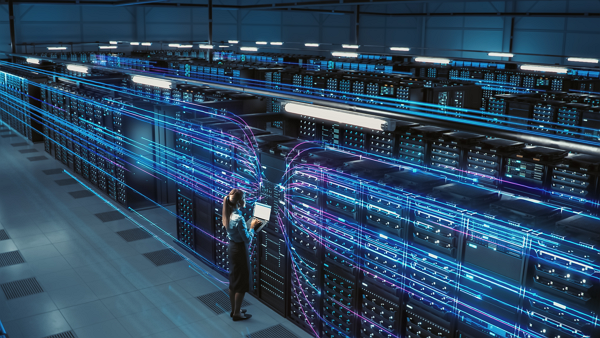
AI data centres are facing continuing supply shortages for now, but an equipment glut could deliver a major shock to stock markets over the longer term, the Financial Times reported on Thursday.
The report said shares of AI cloud startups such as CoreWeave and Nebius fell sharply this week. The companies are seen as among the first to be hit if AI demand slows, and the declines could be an early signal of the shock ahead, the FT said.
Short-term demand still far outstrips supply. Five hyperscalers — Alphabet, Amazon, Meta, Microsoft and Oracle — increased their capital expenditure budgets again this year. They are expected to spend nearly $800 billion on capital investment this year, almost double from a year earlier. That is nearly twice last year’s amount.
GPU rental prices also show demand remains high. According to SemiAnalysis, spot rental fees for Nvidia’s B200 chips exceed $6 per hour. That is up about 50 percent from six months ago. SpaceX said in its first earnings report after listing that it can recoup the entire cost of building computing equipment within 1 year on contract revenue alone.
But the story changes when shifting to the medium-term outlook.
The Brookings Institution estimated that, for data centre operators to earn appropriate returns, annual spending on AI services would need to reach $3.7 trillion by 2032. That would be equivalent to 9.2 percent of U.S. gross domestic product.
IT market research firm Gartner says combined AI revenue from now through 2030 would need to total $8.5 trillion for data centres to earn proper returns on their investments. Gartner expects actual AI revenue over the same period to total just $3.6 trillion.
The FT said nearly 4 years after the launch of ChatGPT, the AI productivity revolution remains only a promise. It also said shortages of power and chips, opposition to data centres, and financing difficulties caused by rising interest rates could slow the pace of data centre construction. The FT said that even in that case, stock markets could take a heavy hit because high expectations for growth are reflected in AI share prices.
 Chi-gyu Hwang
delight@d-today.co.kr
Chi-gyu Hwang
delight@d-today.co.kr