
South Korean game companies are successively running playtests that involve users from the development stage of new titles. The approach goes beyond checking server stability and bugs. Developers revise game structure and balance based on actual play data and user reactions, then verify the changes again.
This is seen as aimed at reducing trial and error by gauging market reactions before official launches, as the number of PC and global new titles rises and development periods lengthen.
◆ Test → revise → test again... user verification from mid-development
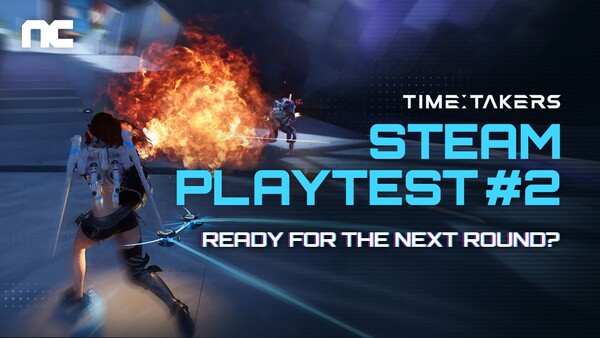
A representative example is the time-survival shooter "Time Takers," published by NC.
"Time Takers" held a closed beta test (CBT) in March and then opened a global playtest on Steam in September. NC revised the game based on data and user opinions gathered from the two tests. It will run another global playtest from Nov. 13 to 16.
For the November test, it will adjust combat balance and each character’s distinctiveness by reflecting feedback from September. It will also improve movement controls, combat feedback and visibility. It will also refine the matching system to take user skill and party composition into account.
NC said overall indicators related to play time and repeat play rose in the September test compared with the March CBT. Rather than moving to release after a single test, it has users verify the revised version again.
"Code Exit," a cooperative new SF horror title to be serviced by Line Games, is also a case in which the game’s core structure was redesigned based on user feedback.
Developer Phase8 Studio analysed Steam reviews of the demo released in May, along with comments from its official Discord and offline tests. It found problems that the game’s goals, progression method and cooperative structure were not clear. It judged this was not a simple matter of improving completeness but an issue tied to the game’s core structure, and redesigned the play experience itself.
In a Steam playtest that began on Sept. 28, it integrated sessions that had previously been split into three stages into one and revised a mission structure that had been complex. It also changed cooperative elements from a format that demanded cooperation only in specific situations to one that encourages natural interaction during play. The test runs through the 19th.
◆ Fewer teams, redesigned map... changing the core structure
"Project Zeta," published by Krafton and being developed by Nirvanana, also revised its battlefield and match structure through repeated testing.
"Project Zeta" had a structure in which five teams of three competed during a domestic test early this year. It was later changed to a four-team format and the entire map was redesigned. The developers adjusted the battlefield scale and routes after reflecting feedback such as that waiting times between engagements were long.
After the first global community test in June, it revised matching and growth structures following feedback that early skill and growth gaps carried through to the later stages. It also aimed to have solo and party users meet opponents with as similar a composition as possible. It adjusted key objects and reward structures so that teams falling behind could catch up.
A second global community test reflecting those changes was held on Steam in September. The developers explained that they reflected play data and feedback gathered from the first global test and Gamescom in the build for the second test. In this way, it is continuing an "open development" approach of repeatedly showing a game in development and incorporating user opinions.
◆ Before checking after launch... meeting global users first
This movement also aligns with the expanding environment, centred on Steam, in which unreleased PC games can be shown to users.
Valve will run "Steam Next Fest" from 2 a.m. on the 20th to 2 a.m. on the 27th, Korea time. Valve introduces the event as an opportunity for developers to receive early feedback before official launches and to build a user base for a future release.
XL Games will also release a free demo of its open-world action massively multiplayer online role-playing game (MMORPG) "ArcheAge Chronicles" to users worldwide during the event. Participation is available without a separate application. It adds a new dungeon and newly revealed player-versus-player (PvP) content to the earlier network test content.
For game companies, an advantage is that they can confirm the game’s core structure and region-by-region reactions before official launches. There is also a limitation that test participants are unlikely to represent all users.
Accordingly, the key is expected to be not the number of tests but how effectively the collected data and feedback are reflected in actual development.
An industry official said, "Recently, the timing of revealing new titles to users is getting earlier, and cases are increasing where tests do not end with just one." The official said, "The more a game targets the global market, the more it aims to reduce trial and error by checking actual user reactions during the development process."
 Ho-jung Lee (이호정)
lhj@d-today.co.kr
Ho-jung Lee (이호정)
lhj@d-today.co.kr