
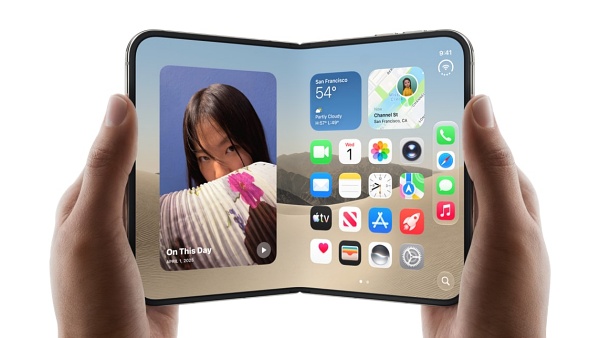
Apple's first foldable phone, the iPhone Duo, quickly sold out its initial allotment as preorders opened. CNBC reported on Oct. 16 that inventory for in-store pickup on launch day ran out, and some online delivery dates have already slipped to late January.
There is also concern that customers who did not preorder may find it difficult to buy an iPhone Duo immediately at Apple stores on launch day. Apple has reportedly told staff to warn customers in advance of that possibility. Launch-day store stock could be very limited. Some stores may have no additional supply beyond preorders. That means customers may not get a device even if they line up from the night before release day.
Apple said the iPhone Duo's demand is "unusual." There has also been speculation that supply would be limited early in the launch. The iPhone Duo is currently sold out through January.
The market is focusing more on a high-price strategy than on sales volume. Analysts say Apple is putting more weight on raising the average selling price among existing high-spending customers than on making foldables a mass-market product. IDC expects foldables to account for slightly more than 2 percent of global smartphone shipments this year, but nearly 7 percent of industry revenue. It projected that shipments will still be about 3 percent in 2030, while revenue share rises to 10 percent.
Nabila Popal (나빌라 포팔), global senior research director for IDC's consumer devices team, said the iPhone Duo is establishing itself as an aspirational foldable. Foldable technology itself is not new, but she said the difference is that Apple has brought the form factor into its large iPhone ecosystem.
Some say the price was set lower than expected. Anshel Sag (안셸 새그), an analyst at Moor Insights, said the market expected a starting price of $2,400 to $2,500, and that Apple's $1,999 price shows its intent to expand market share. He said the iPhone Duo could become a status symbol through the year-end shopping season and into next year.
Early supply shortages could further reinforce that image. Counterpoint Research expected initial demand to exceed supply. With Apple's iPhone installed base at about 1.4 billion units, it said even a small number of early adopters could push demand beyond short-term supply. IDC also expects early supply to be limited due to the product's structural complexity and Apple's manufacturing and quality standards.
Apple has previously pursued high-price strategies. When it launched the first Apple Watch, it introduced an edition made of 18-karat gold starting at $10,000, and it has continued premium collaborations with Hermes. This time, it is effectively extending that approach to the iPhone, Apple's biggest product line.
The market is paying more attention to revenue contribution than shipments. IDC expects Apple to ship about 7 million iPhone Duo units this year, accounting for about 3 percent of total shipments in 2026. It also projected shipments will rise 70 percent next year to take about 40 percent of the global foldable market, and said Apple could become the largest vendor, overtaking Samsung and Huawei.
A large share of iPhone Duo buyers are likely to be existing iPhone users. Consumers who would have bought a Pro Max could shift to a more expensive model, and some could add an iPhone Duo as a second smartphone. JPMorgan said that because of this structure, even if overall iPhone shipments next year are largely flat, the iPhone Duo could have a bigger impact on revenue.
 Hyunwoo Choo
cookinpapa@d-today.co.kr
Hyunwoo Choo
cookinpapa@d-today.co.kr