
The case in which Steve Jobs, who was forced out of Apple in 1985, founded NeXT and pursued an "alliance of the century" with Big Blue IBM, only for it to fall apart at the last minute, is already well known.
The core of the alliance was that IBM would take a licence for NeXT's operating system, NeXTSTEP, and install it in its PC and engineering workstation product lines.
For NeXT, which was short of cash, an alliance with IBM, which dominated the corporate market, was a prime opportunity to improve its financial structure and take on Microsoft head-to-head. The big deal collapsed at the last minute because of Jobs.
Brent Schlender (브렌트 슐렌터), a former Wall Street Journal and Fortune reporter and author of the Steve Jobs book "Becoming Steve Jobs", wrote that Jobs at the time was stubborn and did not negotiate with the other side's position in mind, and that the tie-up with IBM ultimately became a non-event.
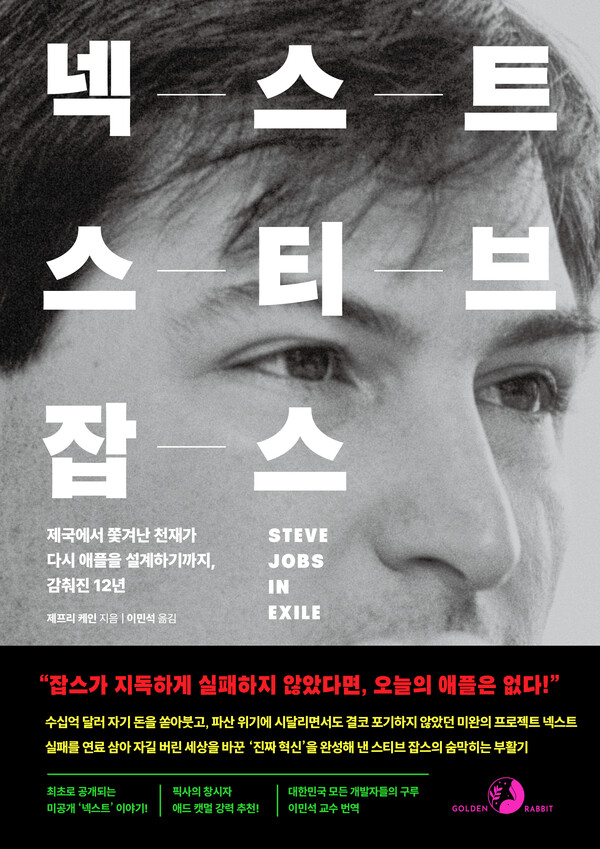
The book "Next Steve Jobs", which covers what happened in the 12 years after Jobs founded NeXT, offers more detailed back story on the matter.
At the time, IBM was very aggressive about an alliance with NeXT. According to the author, IBM was all in.
"Company engineers were already deeply involved in porting NeXT software to the company's PS/2 computers. It had even drawn up plans to convert an old plant in Kentucky into an assembly line to produce these sophisticated machines running NeXTSTEP software. The contract also included extending the partnership period to cover the release of more software versions. If NeXTSTEP succeeded in the market, IBM would secure a good source of profits. With Ross Perot's money, IBM's global market, Businessland's retail empire, and NeXT's revolutionary software, it could stop Bill Gates' growing dominance in computing."
"IBM was also testing NeXTSTEP on its new ultrafast computer, the RS/6000 workstation, and customers were already impressed. Representatives from Shell Oil watched a demo of the NeXT software and said it was "crazy fast", expressing willingness to buy thousands of units."
As the alliance talks with IBM gathered pace, Jobs fell into a dilemma. He did not deny that cooperating with IBM would be a big help in securing NeXT's base of survival, but because the details of cooperation did not match his style, he also gave the impression that he went to the negotiating table reluctantly.
"It was promising, but the IBM deal gave Steve a sense of deja vu. In exchange for an additional $30 million, he was handing over future royalties for NeXTSTEP and granting IBM an exclusive right to run the software on its business computers for the next eight years. IBM now owned the right to copy NeXTSTEP's "look and feel". This was the thing Steve feared most: the loss of control becoming reality."
In the end, Jobs gave up on the alliance.
"On the way to Dallas for a presentation on the IBM deal, NeXT salesman Mark Hayes found Steve at a bookstore at San Francisco International Airport, his face buried in a book and hoping no one would recognise him. Steve turned around, left the bookstore, headed to an escalator, got into his Porsche and drove to the office."
"After the plane arrived, there was a limousine at Dallas Fort Worth International Airport with a fruit plate and even Evian water, but there was no Steve to consume them. IBM read the no-show as a lack of commitment to the relationship between the two companies. The deal was effectively called off. In his relationship with IBM, Steve overestimated his power. And he knew it. Years later, he confided to Pixar co-founder Ed Catmull (에드 캣멀) that he learned a lesson from the failed IBM contract: never overplay your hand."
There are no hypotheticals in history, but it is hard not to ask. What would have happened if the alliance had been concluded at the time? NeXT's management then and now believes the landscape of personal computing would have changed significantly if IBM and NeXT had joined hands.
"Even decades after the contract fell through, NeXT's management still agonised over what might have been. They still believe that if the partnership between NeXT and IBM had been concluded, it would have changed the entire trajectory of personal computing and could have preemptively blocked the Microsoft Windows monopoly that persisted over the next 10 years."
"IBM had promised to invest nearly $100 million, and at the very moment Windows was struggling to gain a foothold in the market, it could have shipped computers equipped with NeXT technology to thousands of corporate customers. NeXTSTEP had a real chance to become an industry standard, but Steve let that chance slip away as if flushing toilet water."
 Chi-gyu Hwang
delight@d-today.co.kr
Chi-gyu Hwang
delight@d-today.co.kr