
[DigitalToday reporter Chi-gyu Hwang] "It is true that new challenges have emerged. But if you look at our cash conversion cycle, it is still negative."
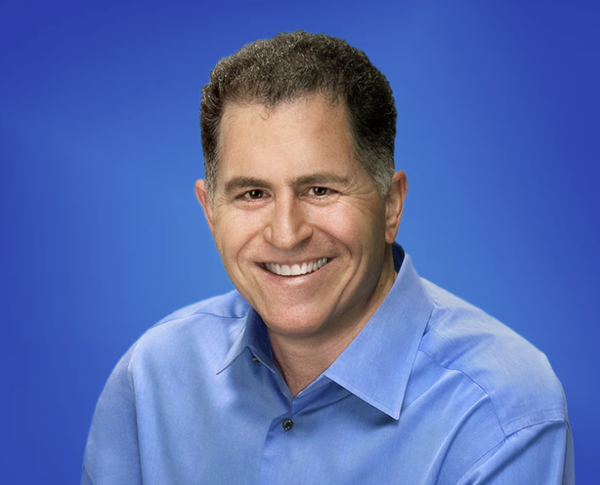
Michael Dell (마이클 델), CEO of Dell Technologies, answered that way when asked how he was preparing for a downturn in the AI boom. Investors rattled by fears of an AI bubble are dumping big tech shares, but he said Dell has the stamina to hold out.
Christopher Mims (크리스토퍼 밈스), a Wall Street Journal (WSJ) columnist, disclosed his conversation with Dell on Oct. 16 (local time) and reported those remarks.
The weapon he touted as a strength is just-in-time production. Dell builds AI servers and PCs when orders come in. It can take payment first and pay parts suppliers relatively later. Dell can hold cash during that period. It also faces less risk of being stuck with unsold inventory. That is the detail behind the CEO's emphasis that its cash conversion cycle is negative.
The WSJ said this contrasts with hyperscalers such as Amazon and Google, and neocloud companies such as CoreWeave, Nebius and Crusoe building data centres even as they increase debt. It also said the approach is rare even among companies benefiting from the AI infrastructure boom.
Dell Technologies' enterprise value has jumped nearly fourfold from a year earlier. Revenue for the current fiscal year is expected to rise 70 percent. The WSJ said Dell ranks No. 1 in the market supplying servers to companies seeking to build their own AI, even though it faces many rivals such as Supermicro, HPE and Lenovo.
Dell said it took 2 years to gather 3,200 AI data centre customers. SpaceX is one of them. In the past 9 months alone, another 3,300 were added. The value of AI servers ordered but not yet delivered totals $95 billion.
Shares of chipmakers, neocloud firms and big tech companies have fallen amid growing concerns about an AI bubble. Dell was no exception. Just-in-time production may not always work to its advantage. Critics say if customers cut orders, revenue could fall immediately.
In response, Dell said the problem is not orders but a shortage of memory chips. He said enough memory chips are needed to deliver ordered servers on time, but memory supply is tight. Asked about next year, he replied "it will be worse" based on the current situation.
Michael Dell said he founded Dell in a college dorm room in 1984 with $1,000 as a direct-sales PC company. Dell now dominates not only PCs but also the enterprise server and storage markets. He is the longest-serving incumbent CEO among Fortune 500 companies and one of the few who experienced the dot-com bubble collapse as a manager. He also said he and his wife Susan Dell donated $6.25 billion to "Trump accounts" for the equivalent of 25 million children. He said he also plans to give away almost all of his wealth during his lifetime.
Corning CEO Wendell Weeks (웬델 윅스) is also one of the executives who went through the dot-com collapse like Dell.
Corning grew rapidly on the fibre-optic boom at the time, then fell along with it when the bubble burst. Perhaps because of that experience, Corning is also proactive in reducing risks from AI investment. The WSJ said that because it processes raw materials, it is difficult for Corning to use Dell's method of getting paid first, but it is instead sharing risks by having customers such as Nvidia, Amazon and Meta also bear the costs of expanding its fibre-optic factories.
 Chi-gyu Hwang
delight@d-today.co.kr
Chi-gyu Hwang
delight@d-today.co.kr