
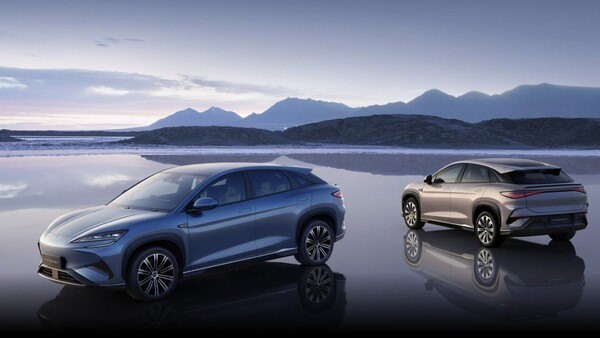
China's electric vehicle maker BYD is pushing ahead with local assembly production in Malaysia. The strategy is to move away from a sales model centered on importing finished vehicles, secure a local production base and speed up its push into the Southeast Asian market.
Cleantechnica reported on Oct. 15 that BYD's Malaysian unit selected Inokom, a subsidiary of Sime Motors, as its local vehicle assembly partner and signed a memorandum of understanding at BYD's headquarters in Shenzhen, China. The signing ceremony was attended by BYD Vice President Liu Xueliang (류쉐량) and Sime Group Chief Executive Jeffri Salim Davidson (제프리 살림 데이비드슨).
BYD plans to produce vehicles using a completely knocked down (CKD) method at Inokom's plant in Kulim, Kedah state, Malaysia. CKD is a production method in which parts are imported and assembled locally, which can reduce tariff and logistics costs compared with importing finished vehicles.
Inokom has experience assembling vehicles for global brands including BMW, Porsche and Hyundai Motor. BYD will be able to reduce the initial investment burden associated with building a new plant by using existing facilities and skilled workers.
BYD in particular has put on hold plans to build its own assembly plant in Tanjung Malim, Malaysia, and changed its strategy to work with a local company.
Jacob Ma (제이콥 마), head of BYD Malaysia, said the partnership shows a commitment to long-term investment in the local market. He said it would integrate new energy vehicles and battery technology into Malaysia's auto industry.
Malaysia is pushing to develop its electric vehicle industry. The government set a target of raising the share of electric vehicles to 15 percent of total auto sales by 2030.
BYD currently sells various electric vehicles locally, including the Atto 3, Seal and Sealion 7. This year, competition with Malaysian homegrown brand Proton has intensified, making expanded market dominance a new challenge.
The models to be assembled locally, the start date for production and production volume have not been disclosed. Whether it can secure price competitiveness through local production is expected to determine BYD's expansion in the Malaysian market.
 Choi Jae-won
ittt_0801@d-today.co.kr
Choi Jae-won
ittt_0801@d-today.co.kr