
[Digital Today reporter Seung-a Yoo] Memory chip shares have slumped this week. Investor sentiment weakened as China’s technology catch-up and the possibility of oversupply in 2029 came into focus.
CNBC reported on the 15th that over the past five sessions SK Hynix has fallen 26 percent, Samsung Electronics 22 percent and Micron about 11 percent. Still, it is worth examining whether China’s production expansion will translate into a real increase in supply and whether this pullback reflects excessive pessimism.
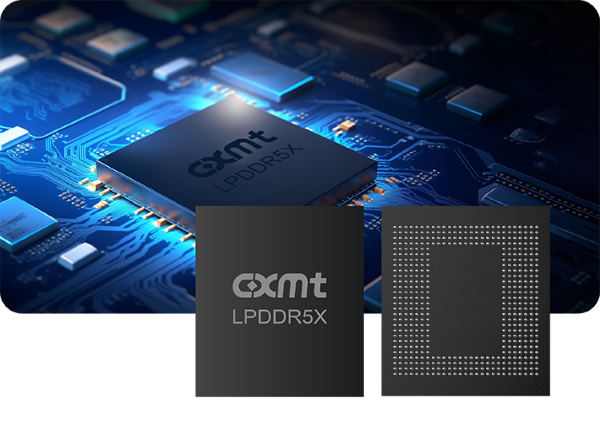
The trigger that rattled investor sentiment was China’s ChangXin Memory Technologies (CXMT) announcing server memory products. When CXMT said it would unveil products based on a new architecture, the market raised concerns that the technology gap could narrow. The design could raise storage density, prompting suggestions it could erode the market share of Samsung Electronics, SK Hynix and Micron.
But technology development does not immediately translate into large-scale supply. Ben Barringer (벤 배링거), global technology research head at Quilter Cheviot, said the key is yield, pointing out that if yields are only 50 percent, half of the chips produced may have to be discarded. Kevin Cassidy (케빈 캐시디), senior research analyst at Rosenblatt Securities, also said CXMT’s moves are not enough to change the supply-demand structure of the memory market.
A forecast of oversupply in 2029 also added to unease. The market paid attention to a Maeil Business Newspaper column in which a Seoul National University professor identified as Hwang and An Ki-hyeon, executive director at the Korea Semiconductor Industry Association, mentioned the possibility that new memory supply could surge. The column predicted that after the 2030 memory supercycle ends, the industry could enter a downturn. Elon Musk, CEO of Tesla and SpaceX, also wrote on X, formerly Twitter, that China would produce memory (RAM) on a tremendous scale in 2028.
But it is hard to conclude that the memory supply shortage will be resolved in the short term. Memory is essential not only for smartphones and laptops but also for Nvidia chips and data centres. As AI investment expands and demand surges, supply has tightened, and rising prices have lifted the share prices of major memory makers. By contrast, it takes 3 to 5 years to build and start operating production facilities, and many analysts believe the shortage could last until 2028.
Even if supply increases, it is unclear whether a sharp price collapse like in the past will be repeated. Counterpoint Research forecast that DRAM prices could fall about 23 percent in 2028 from 2027, but would still be about 230 percent higher than in 2025. A senior analyst at Counterpoint Research said the memory market has entered a "new normal". The analyst said the spread of 3 to 5-year long-term supply contracts, including prepayments and price floors and ceilings, could also soften the impact of down cycles compared with the past.
Ultimately, the latest sharp fall reflects a combination of China’s technology catch-up and fears of future oversupply. But it takes time for technology to translate into mass production and expanding market share, and it also takes a considerable period for major companies to expand capacity. There also remains the possibility that AI demand has changed the memory industry’s traditional boom-and-bust cycle. Rather than treating oversupply or a prolonged slump as a foregone conclusion based solely on the immediate share-price decline, it is necessary to confirm actual capacity expansion and shifts in supply and demand.
 Seung-a Yoo
ysah@d-today.co.kr
Seung-a Yoo
ysah@d-today.co.kr