
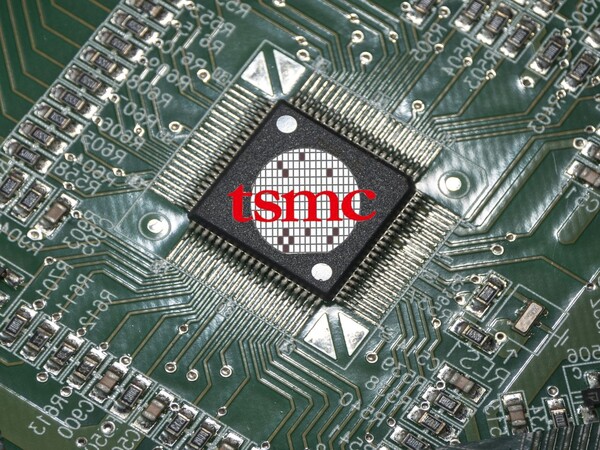
Taiwan's TSMC reported third-quarter results that beat market expectations, but its shares fell amid selling in artificial intelligence-related stocks.
On Oct. 15, investors sold related stocks as concerns spread over the debt burden of AI cloud company CoreWeave, SiliconANGLE reported. TSMC was also affected.
The selloff began after an X post on Oct. 14 pointed to CoreWeave's level of debt. It later spread to neocloud companies and related hardware suppliers. Samsung Electronics and SK Hynix fell more than 8 percent, and Intel was down 6.6 percent at one point. Chip stocks later recouped some losses after Nvidia CEO Jensen Huang said in a Bloomberg interview that CoreWeave's cost of capital was falling. Cost of capital affects a company's ability to manage debt.
TSMC's third-quarter revenue came to $46.36 billion, beating the market estimate of $45.40 billion. Net profit rose 69 percent from a year earlier to $23.57 billion, about $500 million above the market forecast. Demand linked to AI drove the revenue growth. The high-performance computing segment, which includes chip production for customers such as Nvidia, accounted for 68 percent of total revenue.
By process, 3-nanometre accounted for 33 percent of revenue, establishing itself as a core product. Since starting 3-nanometre chip production in 2022, TSMC has expanded derivative technologies including an optimised process for data centres and a low-cost process for mobile chips.
It is also expanding production facilities in the United States. TSMC has completed construction of its Fab 2 3-nanometre plant in Arizona and is installing semiconductor manufacturing equipment. Mass production is scheduled to begin in the third quarter of 2027. The plant is part of its $265.0 billion U.S. investment plan. TSMC has built a nearby 4-nanometre plant, and last year it also broke ground on a third plant that will produce 2-nanometre and 1.6-nanometre chips. It is also building a semiconductor packaging facility. Packaging is a technology that connects components such as a graphics card's computing module and memory module.
Demand beyond AI also grew. Demand for automotive semiconductors rose 22 percent from a year earlier, and orders from smartphone manufacturers increased 10 percent.
TSMC's medium- to long-term growth strategy is focused on the 2-nanometre process and next-generation technologies. The 2-nanometre process, which began production in the fourth quarter of 2025, accounted for 8 percent of third-quarter revenue, up from 3 percent in the previous quarter. TSMC is increasing 2-nanometre capacity while developing A16, its 1.6-nanometre process. The company plans to sharply increase capital investment over the next 2 years to support its growth strategy.
 Seung-a Yoo
ysah@d-today.co.kr
Seung-a Yoo
ysah@d-today.co.kr