
Whistleblower rewards for internal wrongdoing at small financial firms such as savings banks, mutual finance groups, and card and capital companies will be expanded to as much as 1 billion won. Not only current employees but also retirees and outsiders will be able to report. If a whistleblower faces disadvantages after reporting, the system will be revised so the financial company must prove the action was not retaliatory.
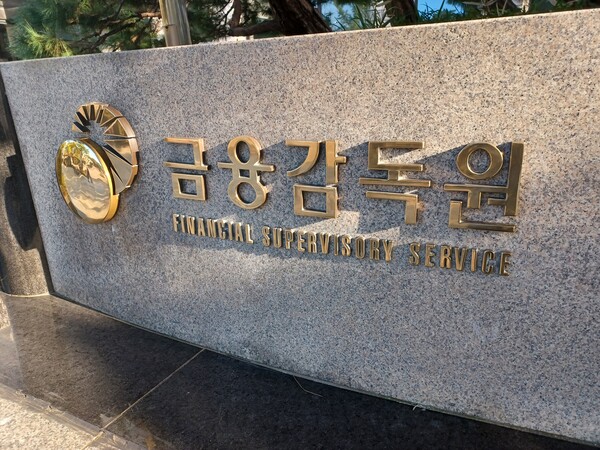
The Financial Supervisory Service said on Tuesday it prepared and will implement measures to promote compliance reporting together with the Korea Federation of Savings Banks, central mutual finance bodies and the Credit Finance Association.
The overhaul focuses on unifying whistleblowing systems that were operated differently by sector and strengthening rewards and protection for whistleblowers. Savings banks have applied the changes since Oct. 1. Mutual finance groups are set to apply them on Oct. 19, and the specialised credit finance sector from Nov. 1.
First, the ceiling for rewards will be raised to a maximum of 1 billion won. Savings banks with total assets of 1 trillion won or more and specialised credit finance companies with total assets of 2 trillion won or more will be eligible for up to 1 billion won. Companies with smaller assets will have a maximum of 500 million won. For mutual finance groups, the limit will be up to 1 billion won for Nonghyup and credit unions, and up to 500 million won for fisheries cooperatives and forestry cooperatives.
The scope of cases eligible for rewards will also be expanded. It will include not only detection of financial incidents but also harm to many financial consumers, serious violations of financial laws and regulations, and advance reporting of illegal or unfair instructions and inadequate internal controls. Calculation standards will also be made more specific, such as paying a certain percentage of the incident amount, damage amount or violation amount.
Eligibility to report will be expanded from current employees to anyone, including retirees and outsiders. Reports can cover not only illegal acts that have already occurred but also matters expected to occur in the future.
To protect whistleblowers, an anonymous reporting channel will be introduced across the board and reporting through a lawyer will be allowed. Seven types of disadvantages will be banned, including unfair disciplinary action and personnel orders, discrimination, bullying, unfair exclusion and unfair audits carried out because of a report.
In particular, if a disadvantage occurs within 2 years after a report, or if there is an attempt to identify the whistleblower or obstruct reporting, the financial company must directly prove the action was justified. A relief fund system will also be created to support medical expenses and litigation costs incurred during the reporting process.
Even if a person took part in an illegal act, the measures allow disciplinary action to be reduced or waived if the person promptly self-reports. By contrast, the basis for disciplining those who know of another person’s illegal or unfair act but do not report it will be clarified. The rule to discipline non-reporters will first apply to savings banks and specialised credit finance companies.
The FSS plans to check the appropriateness of how financial companies operate compliance reporting systems during future inspections and to push for additional improvements where needed.
 Ji-young Lee
ljy@d-today.co.kr
Ji-young Lee
ljy@d-today.co.kr