
Average transaction prices for electric vehicles in the United States rose again last month, while manufacturers’ discount incentives fell to the lowest level this year. Prices were lower than a year earlier, but recent buying conditions appear to have worsened somewhat.
Electrek reported on Oct. 13, citing data compiled by auto market research firm Kelley Blue Book, that the average transaction price for a new EV in the United States in September was $55,879. That was up 2.4 percent from the prior month’s revised $54,574.
It was still 3 percent lower than a year earlier. Kelley Blue Book said a larger share of sales coming from relatively cheaper EV models pulled down the overall average price.
The price gap between EVs and internal-combustion vehicles also narrowed. EV prices in September were 11 percent higher than comparable internal-combustion vehicles. The average gap, about 18 percent last year, has shrunk to around 11 percent this year.
The problem is shrinking discounts. In September, EV manufacturer incentives averaged 11 percent of the transaction price, the lowest this year. That was down 3.2 percentage points from 14.2 percent in the same month last year.
That works out to an average of about $6,147 per vehicle. The size of the discount varies by automaker and model.
The average transaction price for the overall U.S. new-car market also rose for a fourth straight month to $50,562. The burden of higher prices appears to be growing across the broader auto market, not only for EVs.
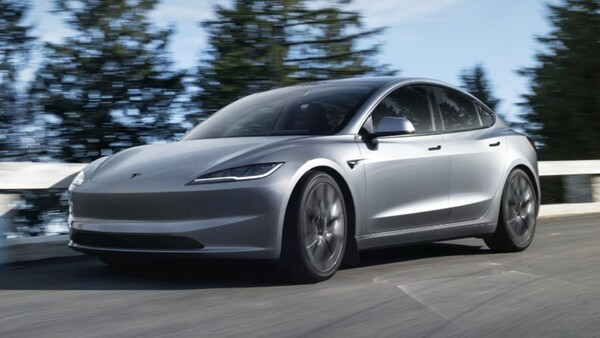
Tesla also joined the upward price trend. Tesla’s average transaction price in September was $54,345, up 3.3 percent from the previous month and 0.4 percent from a year earlier.
Model 3 and Model Y accounted for about 97 percent of total sales, and their average transaction prices were $53,804 and $53,052, respectively. The Cybertruck, which sold about 1,500 units, had an average price of $98,109, the data showed.
The U.S. EV market is narrowing the long-term price gap with internal-combustion vehicles, but the recent price rebound and reduced discounts are acting as factors that raise the burden of buying again.
 Jaewon Choi
ittt_0801@d-today.co.kr
Jaewon Choi
ittt_0801@d-today.co.kr