
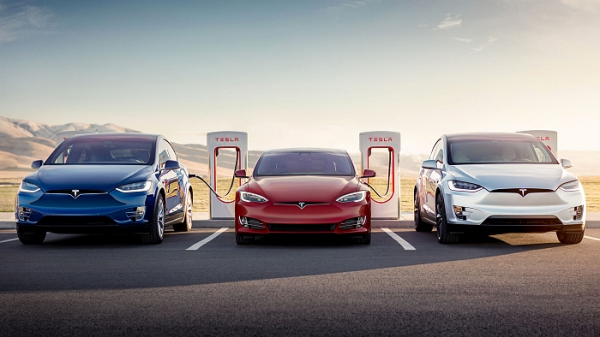
U.S. public fast-charging infrastructure has surpassed 80,000 ports, with Tesla adding the most charging ports again in the third quarter. Charging speeds, site scale and usage have increased, but Tesla Supercharger prices have risen by as much as 15% over the past year, adding to users' costs.
Electrek, an electric vehicle outlet, reported on Oct. 13 that an industry report by EV charging data platform Farron showed U.S. public fast-charging ports increased by 4,106 in July to September. The number of charging sites rose by 664, bringing the total to 14,614 locations and 80,964 ports.
The pace of expansion slowed. In the second quarter, 4,618 ports were added, a bigger increase than in the third quarter. Through September, cumulative port additions were down about 9% from a year earlier, and new station openings fell about 20%.
By operator, Tesla added 1,287 ports in the third quarter, the biggest increase. Another 124 ports installed through the Supercharger for Business program were counted separately. Ionna added 378 ports and Walmart added 344 to follow.
Ionna's expansion reflected the conversion of existing Circle K charging sites. Ionna converted 44 Circle K locations during the quarter. Farron also counted cases in which other operators acquired sites by replacing existing equipment as new infrastructure.
Tesla also led in site size. It installed an average of 13.1 ports per new location and opened 11 large charging sites with 24 stalls or more. The largest new site was a 48-stall charging station in Fort Lauderdale, Florida.
Charging equipment power is also trending higher. Of all fast-charging ports newly installed in the third quarter, 73% were 250 kilowatts or more, up from 60% a year earlier. In networks excluding Tesla, the share of ports at 400 kW or more rose to 35%. It was about 10% in the same period last year.
Usage also increased. U.S. fast-charging sessions in the third quarter rose 26% from a year earlier to 50.4 million. In July, sessions hit a record monthly high of 17.6 million. National average charger utilization was 15.9%, little changed from 15.8% in the second quarter.
Regional gaps in utilization were pronounced. The average utilization rate across the 30 largest charging markets was 21.1%, but other areas were at 11%. Los Angeles posted a utilization rate of 31.8%, about twice the national average. The national average charging network reliability score was 93.9. Of 52 states and territories assessed, 50 scored 90 or higher, with only Oklahoma and Vermont below 90.
Charging prices showed a clear upward trend at Tesla. The average U.S. fast-charging price in the third quarter was 54 cents per kilowatt-hour, up 2.7% from a year earlier. Farron pointed to Tesla's price increases as a main driver of the overall rise.
Tesla Supercharger average non-member pricing rose 15% over the past year to 56.9 cents per kWh. Member pricing also rose 9% to 39.6 cents. By contrast, average pricing in charging networks excluding Tesla held around 53.3 cents per kWh for a fifth straight quarter.
Differences under time-of-use pricing were also large. The average peak-period price at charging sites using time-of-use pricing was 63.7 cents per kWh, compared with 43.8 cents off-peak. That implies a difference of about 20 cents per kWh depending on time of use even with the same amount of charging.
The concentration of new charging sites in cities was also cited as a challenge. In the third quarter, 90% of newly opened charging sites were in urban markets, and rural additions accounted for only 68 of the 664 new locations. While fast-charging infrastructure is growing in scale and power, some pointed to the need for further expansion to improve charging access in suburbs and rural areas.
 Jinju Hong
hongjj@d-today.co.kr
Jinju Hong
hongjj@d-today.co.kr